
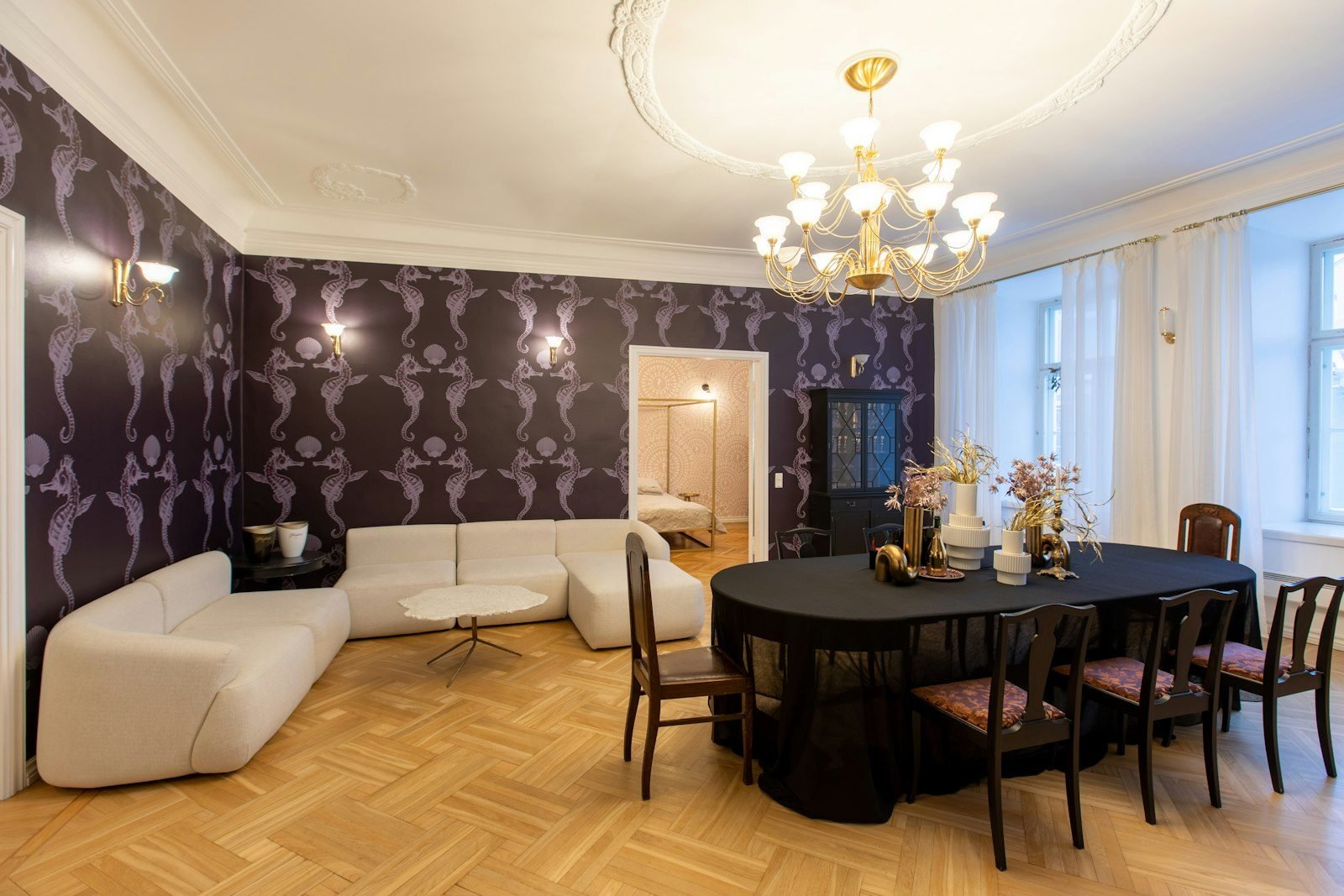
Few changes transform a room as quickly as wallpaper. But the same pattern that works in a living room can go wrong in a bathroom, and the material that survives a kitchen is not always the most comfortable choice for a bedroom. Each room has a different priority: in the living room it is the scale of the pattern; in the bedroom, rest; in the bathroom, humidity; in the kitchen, washability.
This guide gathers in one place what changes in wallpaper by room: which wall to cover, which material to choose, what to avoid, how to estimate rolls and what to check before you buy. If you are still deciding where to start, use the quick map below and jump to the room you care about.
Quick map: what changes from room to room
| Room | Priority | Best material | Where to hang it | What to avoid |
|---|---|---|---|---|
| Living room | Pattern scale and color | Vinyl for heavy use; textured for the TV wall | Behind the sofa, the dining wall, niches | High-contrast patterns behind the TV; steam and grease zones in open-plan kitchens |
| Bedroom | Rest and calm colors | Vinyl, non-woven or paper (in a dry room) | The headboard wall | Walls with moisture; four patterned walls in a small room |
| Bathroom | Moisture resistance | Vinyl (solid or with a fabric/paper backing) | Powder room; the toilet wall, away from the shower | The shower zone; walls with leaks; the ceiling in a bathroom with a shower |
| Kitchen | Washability and grease | Washable vinyl with a non-woven backing | Support walls, the dining area, the back of open shelves | Behind the stove; the sink splash zone |
Three rules that apply to every room
- The wall must be dry and healthy. Wallpaper does not fix leaks, mold or moisture rising from the floor: it hides the problem and can lift or grow mold. Fix the cause first, with a qualified professional.
- One accent wall is usually enough. It creates a focal point, uses less material and lowers the risk of overloading the room, especially a small one.
- Test before you buy. Get a sample and tape it to the wall for a few days; look at it in morning, afternoon and evening light. Color and scale change a lot over the day.
Living room wallpaper: accent wall, scale and color
Living rooms tend to have wide, continuous walls, which suits wallpaper: the pattern shows up whole instead of being broken by windows, cabinets or doors every few feet. It is also a social room where people spend short stretches of time, so it is worth taking a bit more risk than in the bedroom. In most living rooms the best choice is a single accent wall, which creates a clear focal point and often takes the place of large artwork or built-in paneling.
Which wall to cover
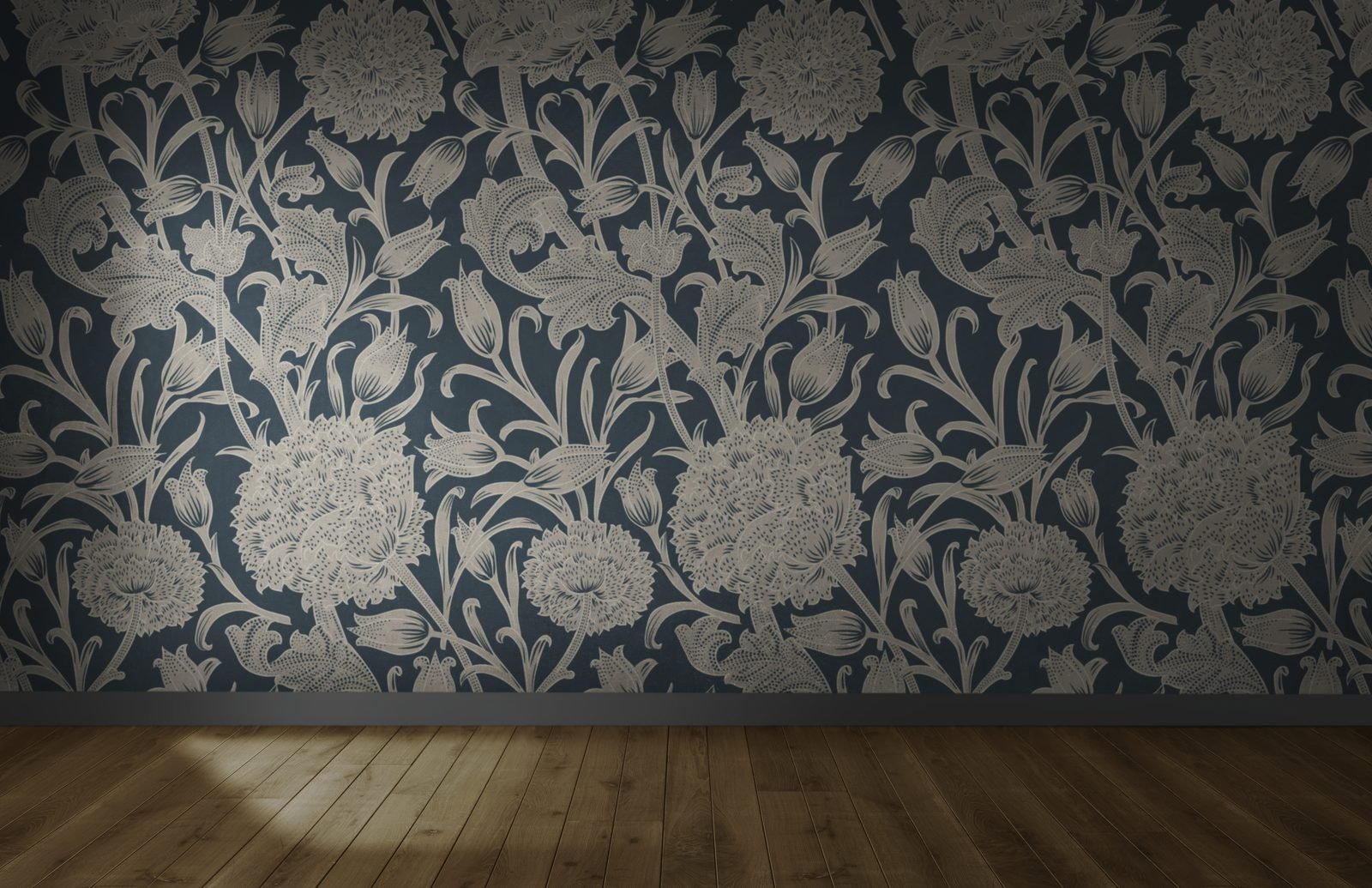
- Behind the sofa: the most natural candidate. The sofa acts as a base for the pattern. Choose medium or large designs, since this wall is usually seen from across the room.
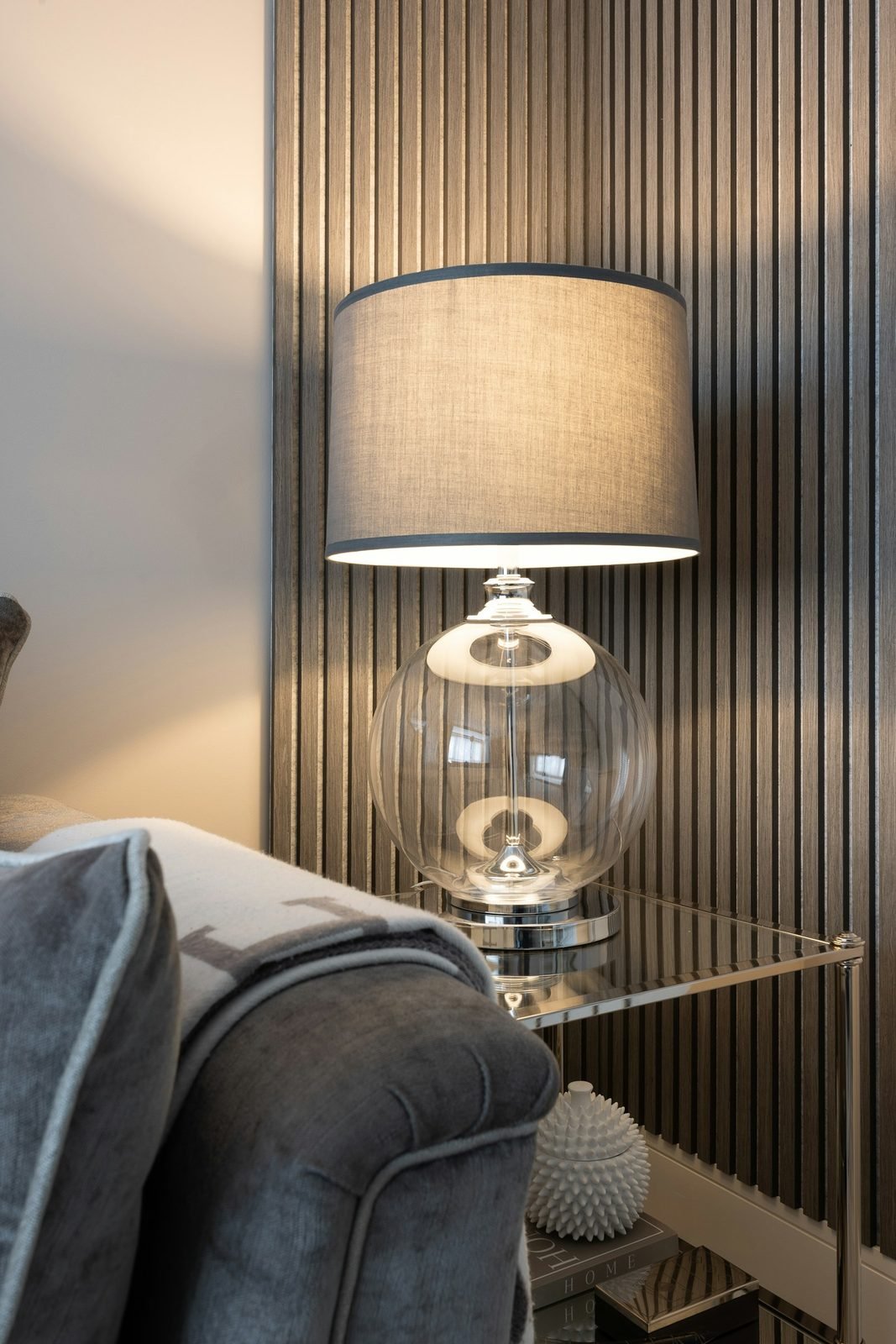
- The TV wall: moderation is the rule. High-contrast patterns behind the screen compete with the picture and tire the eyes. Subtle textures, linen, concrete or slatted effects in dark tones work better because they frame the TV without fighting for attention.
- The dining wall: in open-plan rooms, covering only the wall behind the table helps separate the areas visually. To plan both areas together, see how to combine a living room and dining room.
- Ceiling or niches: if you want to be bold, wallpaper on the ceiling or the back of a bookcase adds depth. It works best with higher ceilings and softer patterns.
Pattern and scale: where most regrets begin
The most common mistake is not the choice of design but its size relative to the wall.
- Large walls take bold patterns such as florals, foliage and arabesques. Designs that are too small, seen from a distance, turn into a muddy texture.
- Narrow or broken-up walls call for smaller designs, stripes or plain textures.
- Geometrics suit contemporary and industrial rooms, but they demand very level walls, because any misalignment shows.
- Textures (linen, grasscloth, concrete, wood) are the safest choice if you are unsure, and for rooms that already have a patterned rug or cushions.
Color, lighting and small living rooms
The wallpaper has to talk to the floor, the sofa and the curtains. A simple method is to choose the paper from a color that already exists in the room, such as a cushion, a rug or a painting. Dark backgrounds such as teal, forest green and aubergine make a room cozy and sophisticated, especially with good natural light; light backgrounds with delicate designs open the space up. For more palette ideas, see our living room color ideas.
In a small living room, pick one wall, favor light or mid-tone backgrounds and avoid strong contrasts. Vertical stripes emphasize ceiling height, while horizontal stripes suggest width; designs with breathing room (background showing between the motifs) feel lighter than dense patterns. More ideas for gaining a sense of space in small living room ideas.
Light matters too. Textures and relief come alive with grazing light from wall sconces or LED strips installed high on the wall; metallic patterns shine under directional spotlights but can reflect too much if the light hits head-on. If the change involves new electrical points, hire a licensed electrician.
Bedroom wallpaper: headboard, pattern and rest
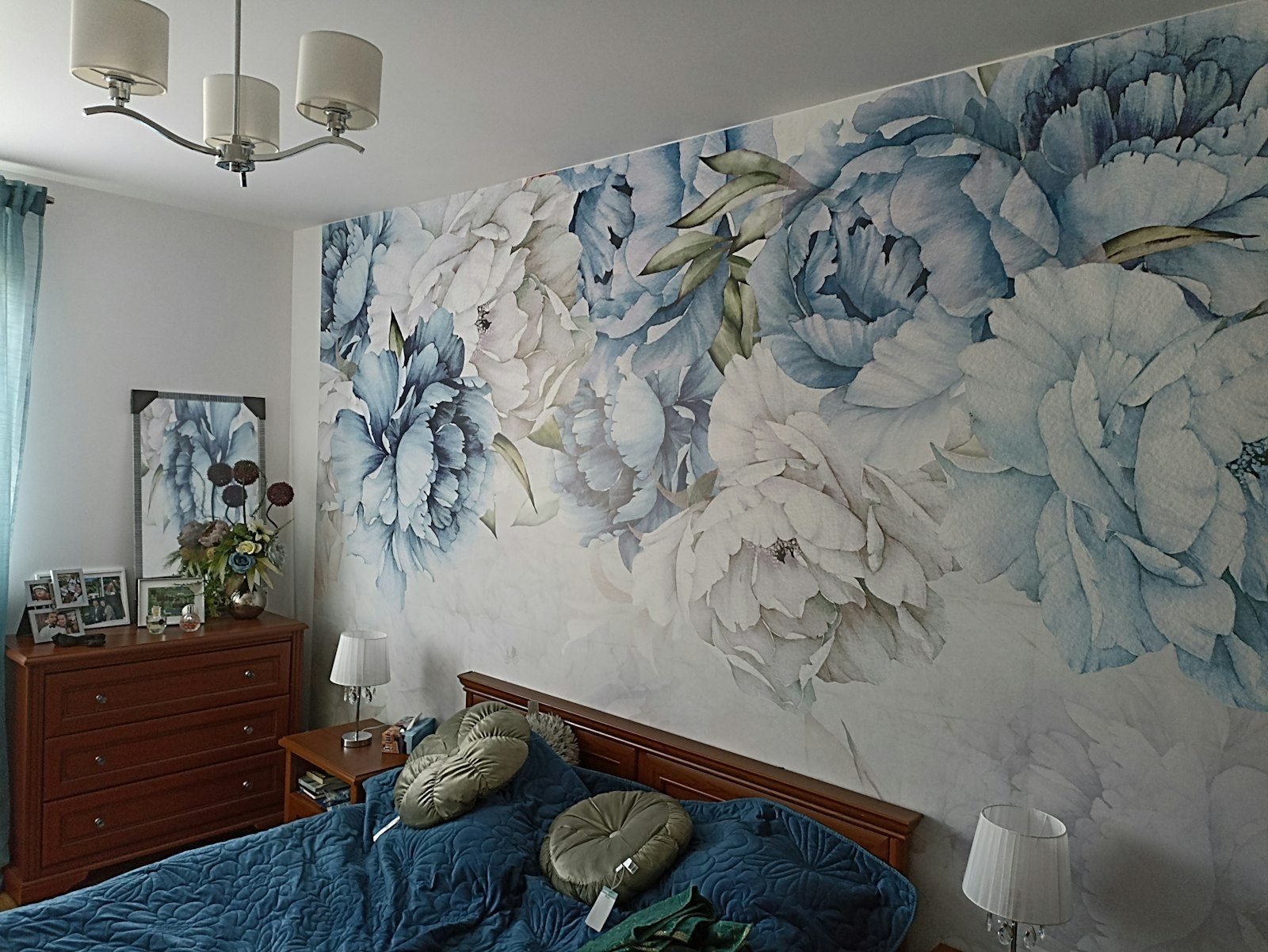
The bedroom is an intimate room for rest, and it is where wallpaper tends to work best. In most bedrooms, it is worth covering just the headboard wall: it draws the eye, frames the bed and leaves the other walls in a neutral tone that works with the paper’s background. Covering the whole room can look beautiful with discreet patterns, light tones and a spacious room; in small spaces, four patterned walls tend to “close in” the room. Another option is to hang the paper only up to half height, combined with paint above.
Patterns for the bedroom
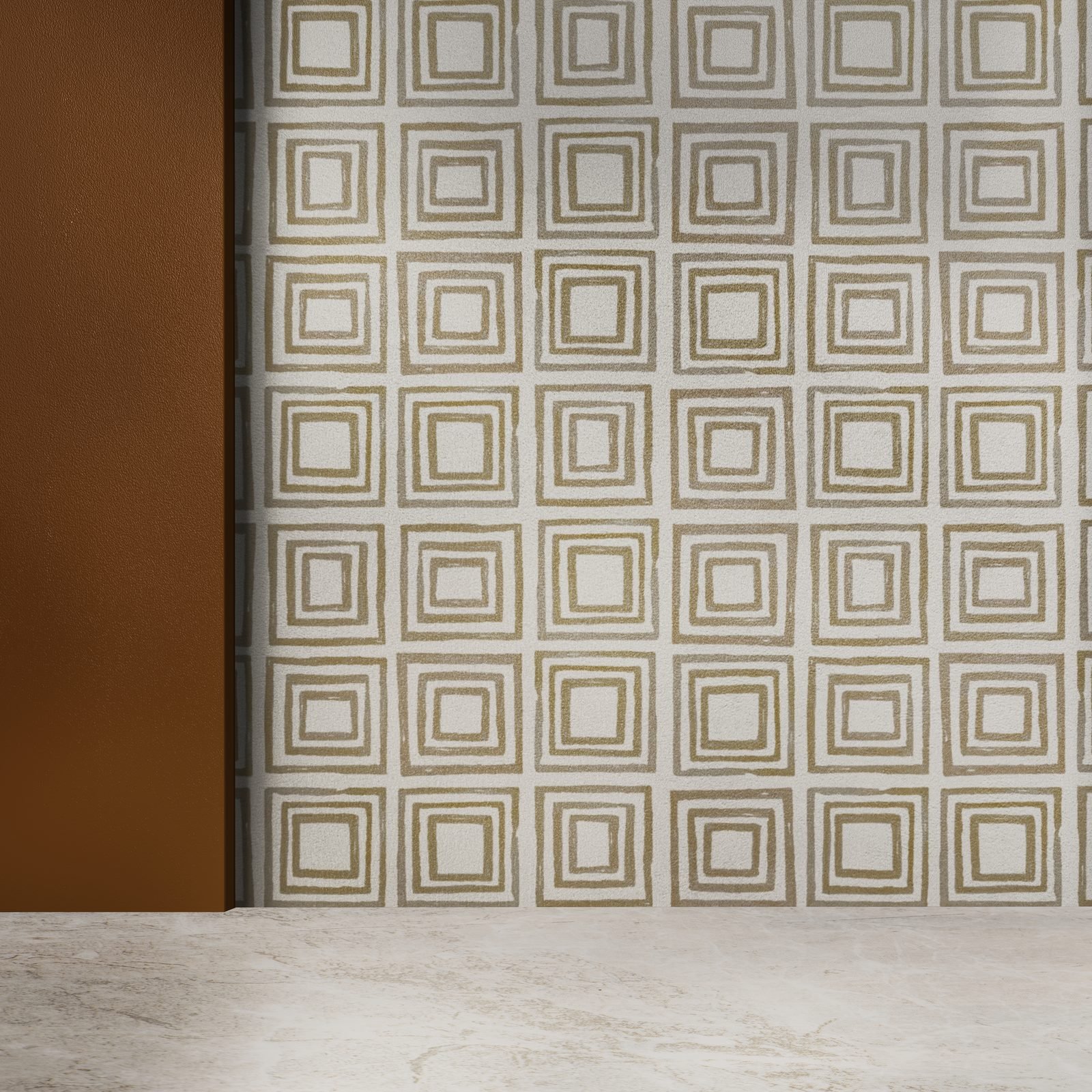
- Geometric: arches, diamonds and lines create a modern, orderly look. With gold or copper lines on a dark background, they bring sophistication without excess.
- Floral and botanical: they go with romantic, classic and boho styles. Large florals call for a single wall and simpler furniture; small florals are more versatile and accept more than one wall.
- Stripes: vertical ones suggest a taller ceiling and horizontal ones “widen” the wall. They are a good entry point if you are wary of patterns.
- Plain textures: linen, grasscloth, concrete or brick effects add depth without an obvious design and suit almost every one of the interior design styles.
A practical rule: the smaller the room, the smaller and more widely spaced the design should be. Large patterns in narrow rooms tend to tire the eye.
Colors that support rest
For the bedroom, calming tones are usually the safest choice: greens, blues, soft earth tones, dusty pinks and warm neutrals. Very saturated colors, such as intense red or vivid yellow, look great in details, but across a whole wall they can feel restless to some people. Bedrooms with little natural light benefit from light backgrounds; bright rooms can take dark backgrounds such as forest green and navy, which create a cozy effect. Repeat one or two colors from the pattern in the bedding, cushions or curtains, and find more headboard compositions in master bedroom decorating ideas.
Care tips to make it last
Dust with a dry cloth and, on washable types, use a slightly damp cloth with mild soap, without scrubbing hard. Leave a few centimeters of clearance between the headboard and the wall, because friction marks the covering. Keep the room ventilated, keep the paper away from steam sources and protect it from intense direct sun, which can fade some types. If a seam starts to open, glue it back right away, before the edge tears. In a rental, choose removable types and agree with the landlord; more solutions in renter-friendly decorating.
Bathroom wallpaper: what stands up to humidity
Many people rule out bathroom wallpaper for fear of mold, bubbles and peeling seams. The worry makes sense, but it does not have to become a ban: the bathroom has the biggest swings in humidity and temperature in the house, and shower steam is wallpaper’s main enemy because it softens the adhesive, creeps into the seams and creates ideal conditions for fungus. So the right question is not “can I or can’t I,” but “which bathroom, which wall and which paper.”
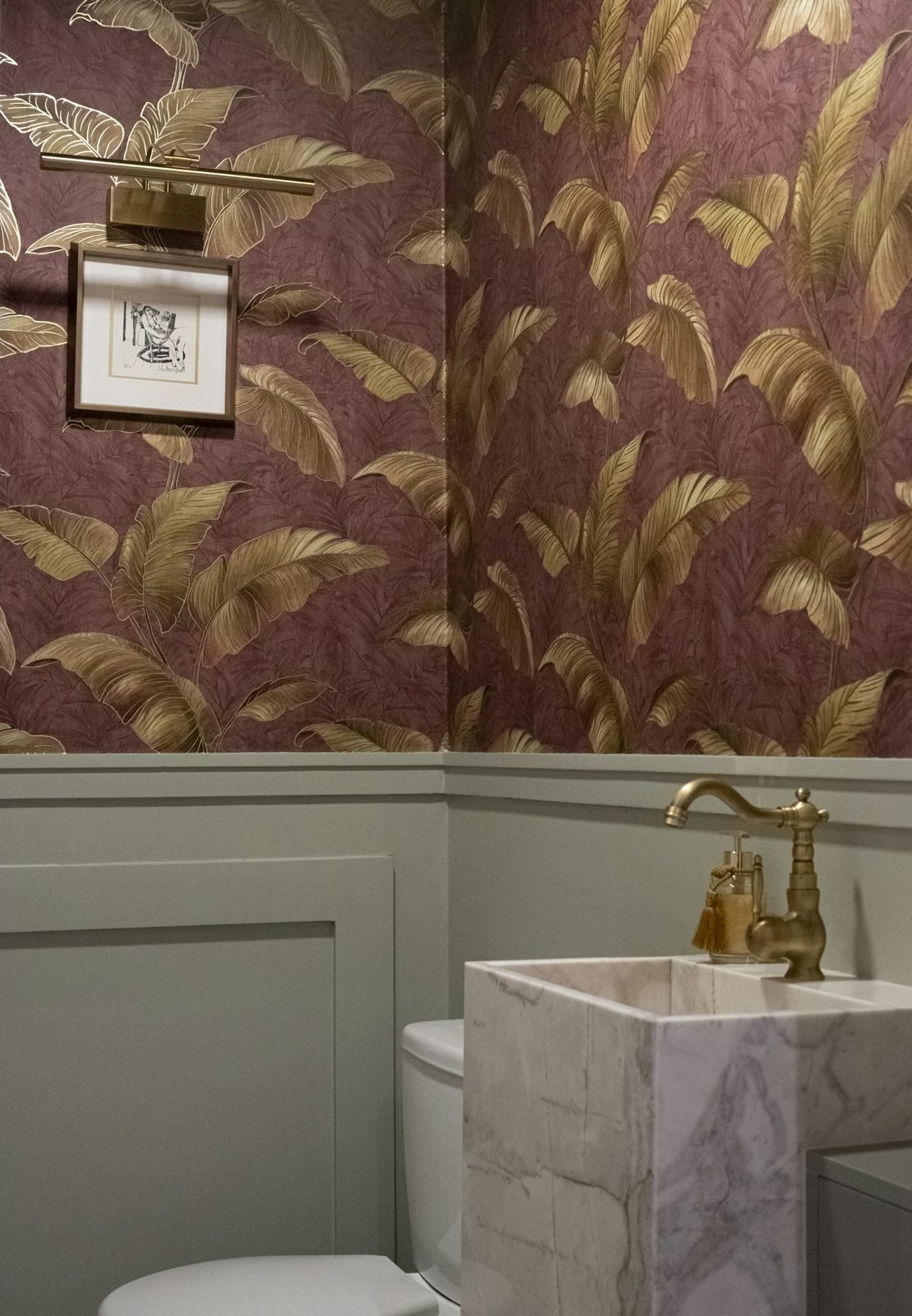
The easiest scenario is the powder room, which has only a toilet and a sink and gets no shower steam: almost any good-quality paper works there. In a full bathroom, the way to go is vinyl wallpaper, concentrated on the walls farthest from the shower and leaving the wet zone to tile, porcelain or another material made for contact with water.
Where to hang it and where to skip it in the bathroom
- The shower zone: do not hang it. Even vinyl is not made for a direct jet of water every day.
- The wall behind the sink: it can take vinyl, but protect the strip just above the basin (with a large mirror, a strip of tile or glass) to avoid constant splashes.
- The toilet wall: usually the best choice for an accent wall in a full bathroom.
- Half walls: tile, wainscoting or washable paint below and wallpaper above is a pretty, practical solution.
- The ceiling: it works in powder rooms; in bathrooms with a shower, steam rises and concentrates there, so it is best to avoid it.
Ventilation and wall preparation
Durability depends more on preparation than on the pattern. The wall must be dry, smooth, clean and free of peeling paint; holes and cracks should be filled and sanded, and a coat of primer helps the adhesive bond evenly. Prefer adhesives made for damp areas, ideally with an anti-mold action, and follow the paper manufacturer’s instructions. At the seams, the most vulnerable spot, press firmly and wipe off excess adhesive with a clean sponge.
After that, ventilation protects the result: run the exhaust fan during the shower and for a few minutes afterward, leave the door or window open so the steam can escape, and avoid hanging wet towels against the paper. If the bathroom has no window or fan, installing an exhaust system should be done by a licensed electrician, and it may be better to prioritize that upgrade before thinking about wallpaper.
Patterns, small bathrooms and powder rooms
A bathroom is a great place to be bold precisely because people spend little time there: a pattern that would tire you in a bedroom can be delightful in a powder room. Foliage and florals bring freshness and go with gold fixtures and plants; geometrics look contemporary; plaid and classic stripes evoke an English style; textures that imitate marble, wood or burnt cement bring sophistication without the cost and weight of the real material. If the floor and countertop already have a strong design, choose a quieter paper.
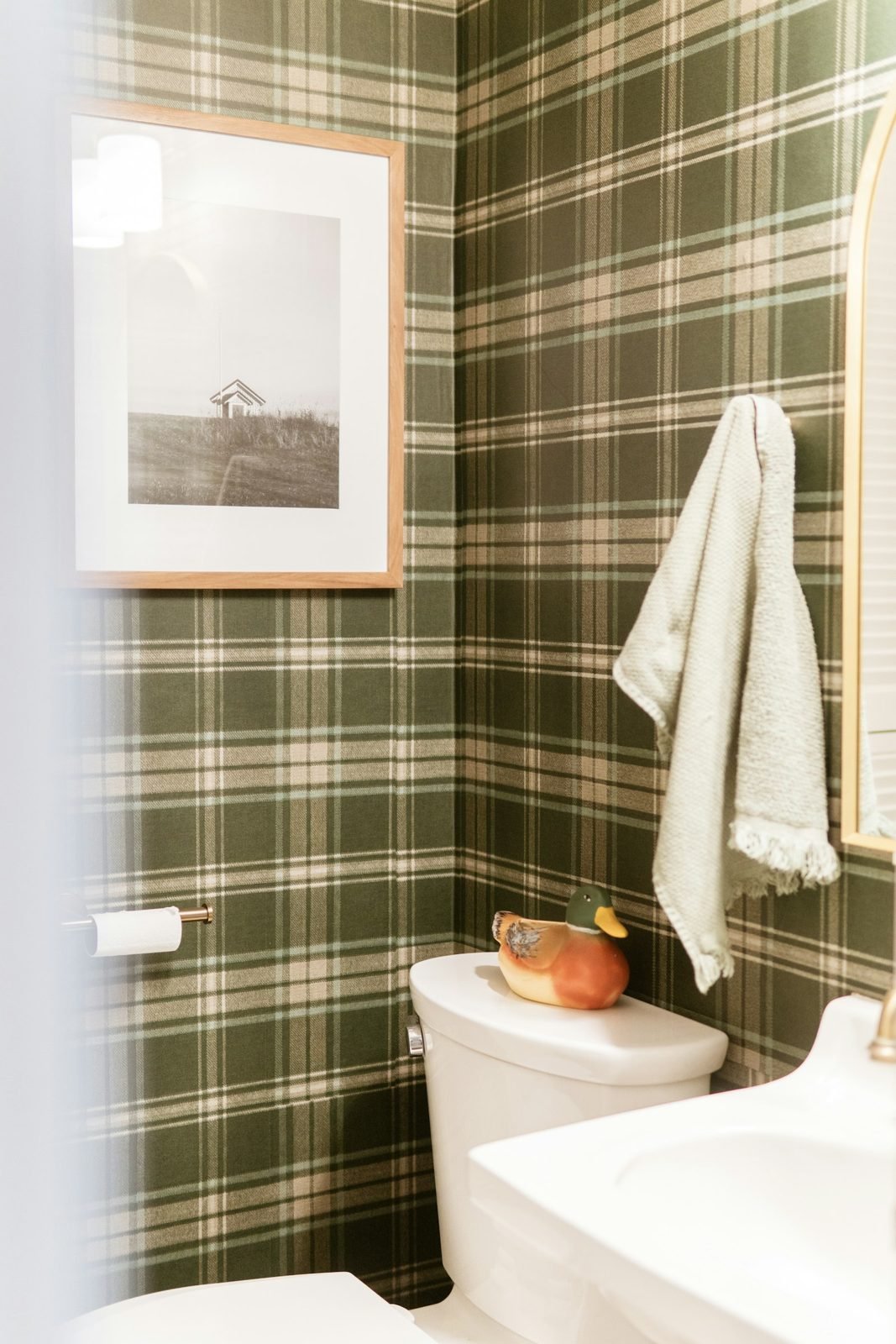
In small spaces, wallpaper often adds depth and makes the room look planned. Prefer mid-scale patterns, which usually work better than tiny prints (cluttered up close), use a large mirror to multiply the pattern and invest in warm, well-distributed lighting. More ideas in small bathroom ideas. Renters can consider removable peel-and-stick paper in the powder room, testing it first in a hidden spot and checking the lease rules.
Washable kitchen wallpaper: how to choose and where to use it
The kitchen is the room that asks most for personality and, at the same time, the one that punishes finishes the most: steam, sauce splatters, grease and wet hands are part of the routine. That is why washable paper is not a technical detail: it is what separates a wall that looks good for years from one that is stained within months.
Washability depends mainly on the surface layer. Ordinary cellulose papers absorb water and stain easily; models with a vinyl (PVC) layer or a coated finish form a film that keeps dirt from soaking into the fibers. For the kitchen, look for three features together: a vinyl or coated surface, good moisture tolerance and a stable backing (such as non-woven), which moves less as humidity changes and makes future removal easier.
How to read the washability symbols
Manufacturers use pictograms on the label or on the back of the sample. The waves stand for water; the brush indicates the material tolerates friction. The names vary from brand to brand, so always check the manufacturer’s own legend.
| Symbol | What it means | Kitchen-friendly? |
|---|---|---|
| 1 wave | Water-resistant: only a light dab with a damp sponge, no rubbing | Not recommended |
| 2 waves | Washable: light marks come off with a damp cloth | Only on walls far from food prep |
| 3 waves | Highly washable: mild soapy water is fine | Yes, if you cook lightly or away from the counter |
| 1 wave + brush | Scrubbable with a soft brush and soapy water | Yes, the safest choice |
| 3 waves + brush | The highest level of cleaning resistance | Yes, for busy kitchens |
Even the most washable papers can struggle with old oil stains. That is why cleaning splatters right away makes all the difference.
Where to hang it in the kitchen — and where to avoid it
Washable wallpaper is tougher, but it does not replace tile or glass in areas of direct contact with water and heat.
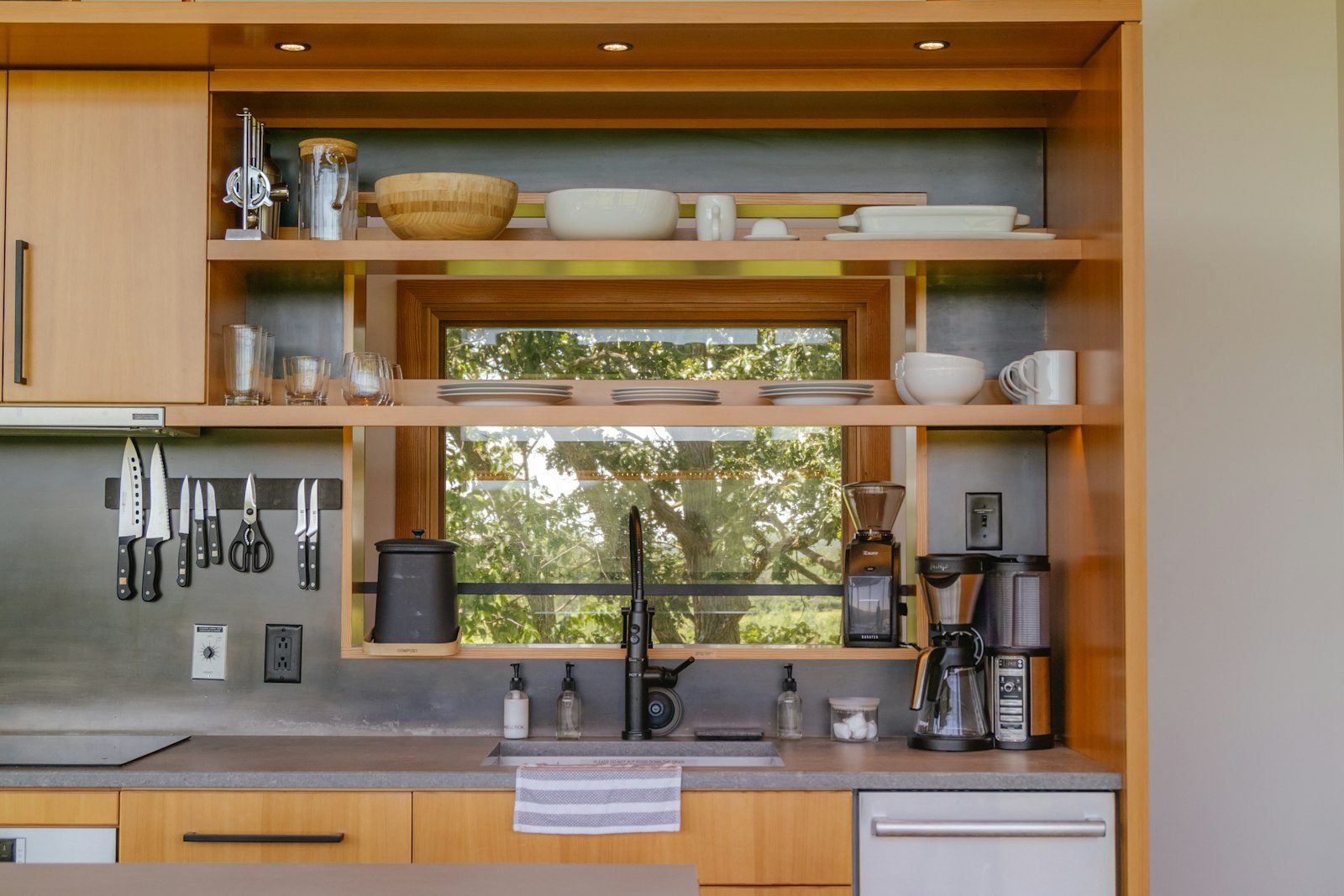
- Behind the stove or cooktop: avoid it. Heat and concentrated grease call for ceramic tile, porcelain, tempered glass or stainless steel; intense heat can warp the paper and make it lift.
- Behind the sink: avoid the splash strip. Use a backsplash or tile up to cabinet height and, if you like, hang the paper above it.
- Support walls and the dining area: the ideal spots, where the paper gets to be the star without suffering direct water.
- The back of niches and open shelves: great for adding color without covering large areas.
- The ceiling: possible in well-ventilated kitchens, but it needs careful hanging; consider hiring a professional.
Patterns, installation and cleaning in the kitchen
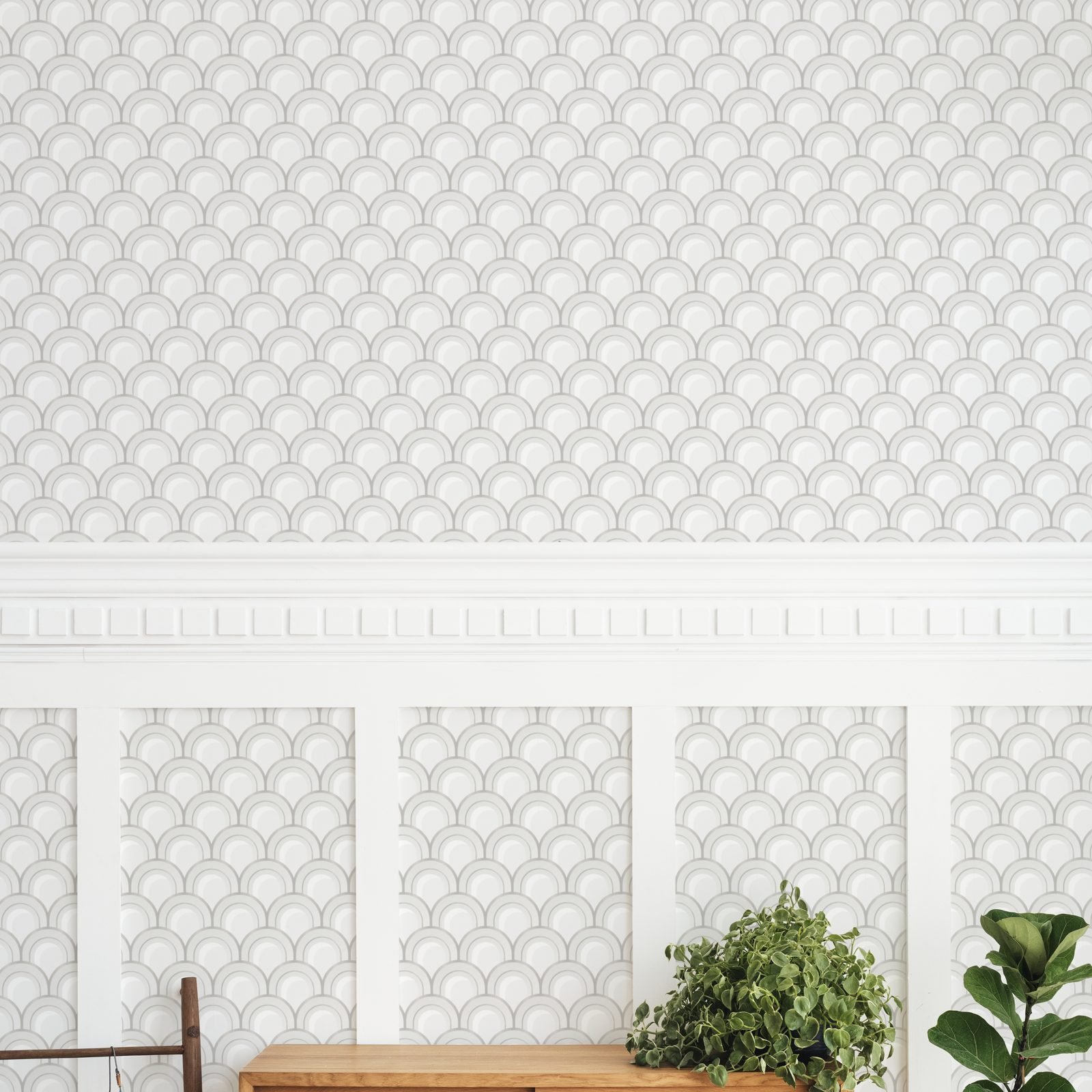
Small geometrics (scales, hexagons, diamonds) hide minor marks and give a tile-like look without construction; thin stripes and discreet plaid suit country or retro kitchens; botanicals and fruit make the dining area cozier. Mid and dark tones such as olive green, terracotta and teal hide stains better than pure white, as long as the room has good lighting. In small kitchens, prefer light backgrounds and smaller-scale patterns on a single wall, and see our guide to small kitchen ideas.
When hanging, three extra precautions: the wall must be clean and degreased, because grease residue keeps the adhesive from bonding; the seams must be tightly closed, since that is where steam usually gets in; and the finish next to the tile or backsplash may call for a trim profile or neutral silicone. When cutting around outlets and switches, turn off the circuit breaker, and leave any electrical change to a licensed electrician.
For everyday cleaning of washable vinyls: wipe splatters as soon as they happen, use a soft cloth or the non-abrasive side of a sponge with warm water and a few drops of mild dish soap, work gently from top to bottom without soaking the seams and dry right after. Test any new product in a hidden spot, and avoid alcohol, solvents, bleach and steel wool unless the manufacturer allows them. Keeping the range hood running with clean filters also reduces the grease that reaches the walls.
Types of wallpaper: quick comparison
| Type | Strengths | Watch-outs | Best for |
|---|---|---|---|
| Vinyl | Moisture-resistant; wipeable with a damp cloth | Less breathable; the wall must be dry | Kitchens, bathrooms (away from the shower), heavy-use living rooms and bedrooms |
| Non-woven | Stable, easy to hang and remove; paste usually goes on the wall | Needs a smooth, prepared wall; quality varies between brands | Anyone who wants simple hanging or plans to change often |
| Paper (cellulose) | Natural matte finish; usually lower cost | Stains easily and should not get wet | Dry bedrooms and low-contact walls; only a very dry powder room |
| Peel-and-stick | No extra paste; practical for rentals | Can lift on uneven walls, in heat or in heavy steam | Rentals, niches, cabinet sides and smaller areas |
| Textured (embossed, linen, grasscloth) | Hides minor flaws and adds a refined look | Collects more dust (duster or vacuum brush); natural fibers stain with water | TV walls and accent walls; avoid natural fibers in bathrooms |
Features vary from one manufacturer to another. Before you buy, read the label for washability, light resistance and the recommended adhesive. If the specification does not mention use in damp areas, take that as a sign to choose another product. For specific looks and finishes, see also our guides to liquid wallpaper and wood slat wallpaper.
How much to buy: estimating rolls
Roll sizes vary by brand and region. A common format is about 53 cm wide by 10 m long (roughly 21 in by 33 ft, around 5 m² or 55 sq ft), but wider and shorter rolls exist, so always check the product you choose. To estimate:
- Measure the width of the wall and divide it by the roll width. Round up: that is your number of strips.
- Measure the wall height and add extra for trimming (the pattern repeat may require more).
- Work out how many full strips each roll yields by dividing the roll length by that height.
- Divide the number of strips by strips per roll and round up.
- Buy at least one extra roll from the same batch for repairs and cutting mistakes.
The batch (or lot) number matters: rolls from different batches can vary slightly in shade, which shows when they hang side by side. Prices vary by region, brand and finish, so it is worth getting more than one quote. The step-by-step installation is in how to hang wallpaper.
Checklist before you buy and hang
- Is the wall dry, firm and free of mold or leaks?
- Were holes and cracks repaired, and has new paint cured for the time the paint maker recommends?
- Is the material right for the room (vinyl in bathrooms and kitchens), and does the label show the washability you need?
- Will the shower zone and the strip behind the stove and sink stay free of paper?
- Is there a working fan, window or range hood to let the steam out?
- Did you test the pattern with a sample at different times of day, and does its scale suit the wall?
- Does the color work with the floor, furniture, rug and curtains?
- Did you measure the wall, confirm the roll size and buy every roll from the same batch, with extra for pattern matching?
- Is the adhesive the one recommended for the paper type (and for damp areas, when relevant)?
- In a rental, do the lease and the landlord allow it?
- If there is any electrical or ventilation work, is a licensed professional involved?
About rentals: anyone who knows the day-to-day of real estate will tell you that talking first avoids friction when you hand back the keys. When in doubt, removable peel-and-stick paper is usually the easiest option.
Frequently asked questions
Does living room wallpaper go out of style?
Patterns tied closely to a trend can tire faster. Textures, classic florals and stripes tend to age better. Because wallpaper is removable, changing it is simpler than redoing textured paint or ceramic tile.
Can I use wallpaper on every wall of the living room?
You can, but the result is more balanced with soft patterns or discreet textures. Strong designs on every wall tend to overload the room, especially a small one.
Is wallpaper a good idea in a small bedroom?
Yes. Cover a single wall, with a small or widely spaced pattern on a light background. Vertical stripes also help elongate the room.
Does wallpaper in a bedroom or bathroom cause mold?
The paper itself does not cause mold, but it can aggravate an existing moisture problem. In a bedroom, hang it only on dry walls and keep the room ventilated. In a bathroom, the risk drops a lot with vinyl paper, adhesive made for damp areas, effective ventilation and distance from the shower.
Can I hang wallpaper inside the shower?
It is not recommended. Even washable papers are not made to take a daily jet of water. In the wet zone, use proper coverings such as ceramic tile, porcelain or mosaic tiles.
What is the best wallpaper for a powder room?
Because a powder room gets no shower steam, it accepts most good-quality papers. Even so, a washable type makes it easier to clean the wall near the sink.
Can washable wallpaper go behind the stove?
It is not recommended. Heat and concentrated grease can warp, stain or loosen the paper. Behind the stove and cooktop, choose ceramic tile, porcelain, tempered glass or stainless steel.
What is the difference between washable and scrubbable?
Washable paper takes a damp cloth and, at the higher levels, soapy water. Paper with the brush symbol also tolerates a soft brush, so it can handle more friction — ideal for busy kitchens.
Can I hang wallpaper myself?
On an accent wall, with peel-and-stick or non-woven paper, many people do it themselves. For patterns that are hard to match, uneven walls or large areas, a professional gives more precise seams.
Final thoughts
The right wallpaper changes the look of any room without demolition, as long as the decision follows the logic of the room: in the living room, get the scale and the accent wall right; in the bedroom, prioritize calming colors and good preparation; in the bathroom, choose vinyl and keep the shower zone and steam under control; in the kitchen, check the washability symbols and keep the paper away from heat. Which room are you planning to refresh first? Tell us in the comments.
Featured image: Photo: Baubauwall Wallpapers / Unsplash
Receba ideias de decoração no seu e-mail
Dicas práticas de decoração, jardim e organização da casa. Ao se inscrever, você recebe de presente a planilha grátis "Planejador de Decoração e Reforma". Sem excesso de e-mails.


Deixe um comentário