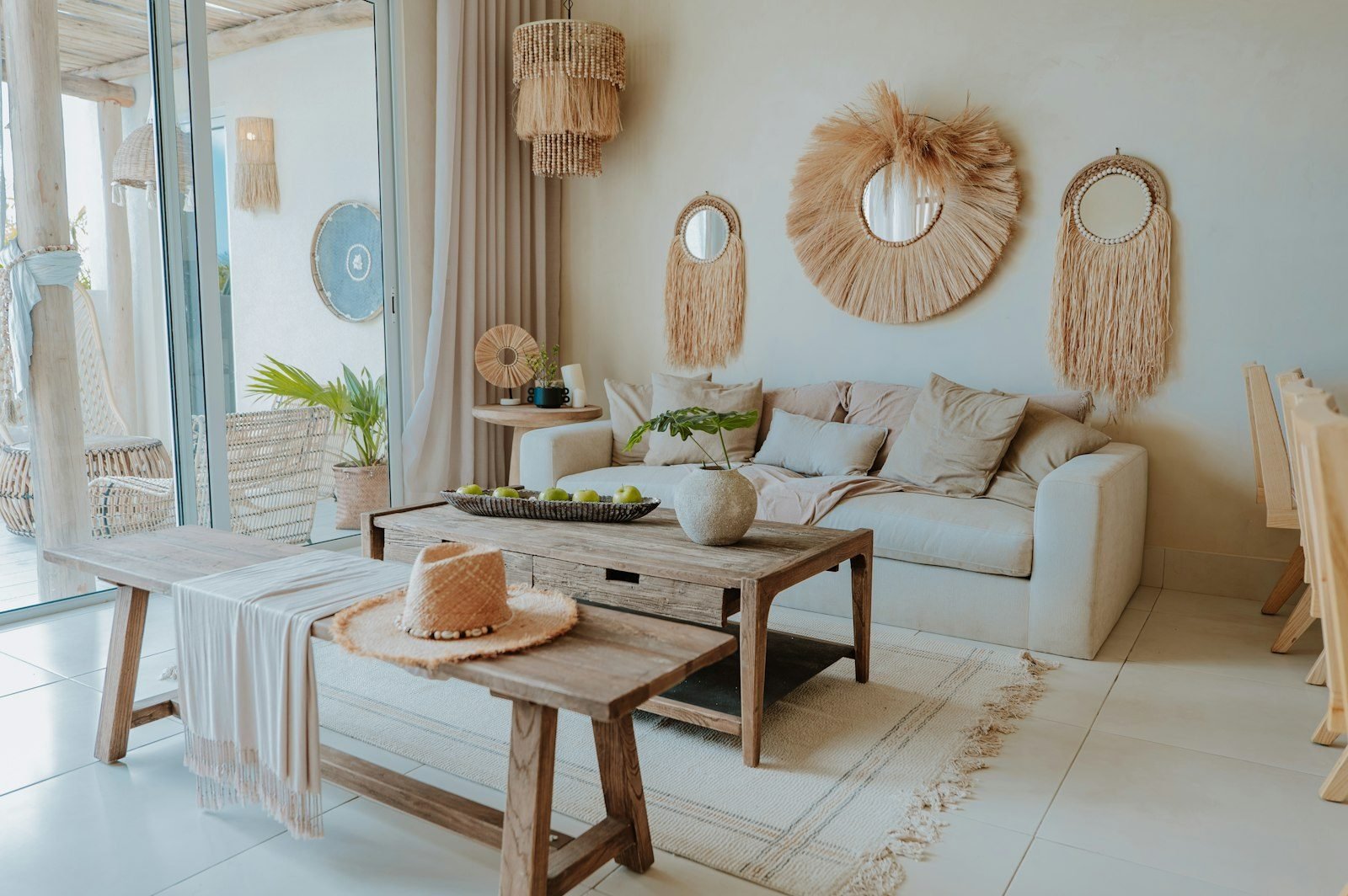
Getting to know the main interior design styles is the most efficient shortcut to a cohesive home. Once you understand what defines each look, it becomes much easier to choose furniture, colors and accessories without that nagging feeling that nothing quite goes together. It also helps you explain what you want to an architect, interior designer or cabinetmaker.
In this guide, we’ve gathered the styles you’ll see most often in homes today, explained how to recognize each one by its materials, shapes and palette, and laid out a simple step-by-step process to discover which one suits you and the way you live.
Clean-lined styles: modern, contemporary and minimalist
These three are often confused, because they share a preference for simple shapes and very little ornamentation. The differences are in the details.
Modern
Rooted in the 20th-century modernist movement, modern style prizes function: straight lines, furniture with visible legs, materials such as wood, leather, glass and metal, and a neutral palette with touches of primary color. The core idea is that form follows function.
Contemporary
This is the style of the present moment, so it keeps changing over time. Today it blends warm neutrals, soft curves, textured fabrics such as bouclé and linen, built-in lighting and the occasional statement design piece. It’s the most versatile of the three and the one you’ll see most often in new apartments.
Minimalist
Minimalism takes simplicity to the limit: few objects, clear surfaces, hidden storage and a pared-back palette, usually white, gray, black and wood. It requires discipline, because any excess stands out immediately, but it rewards you with a calm home that’s easy to clean.
Cozy styles: Scandinavian, japandi and rustic
Scandinavian
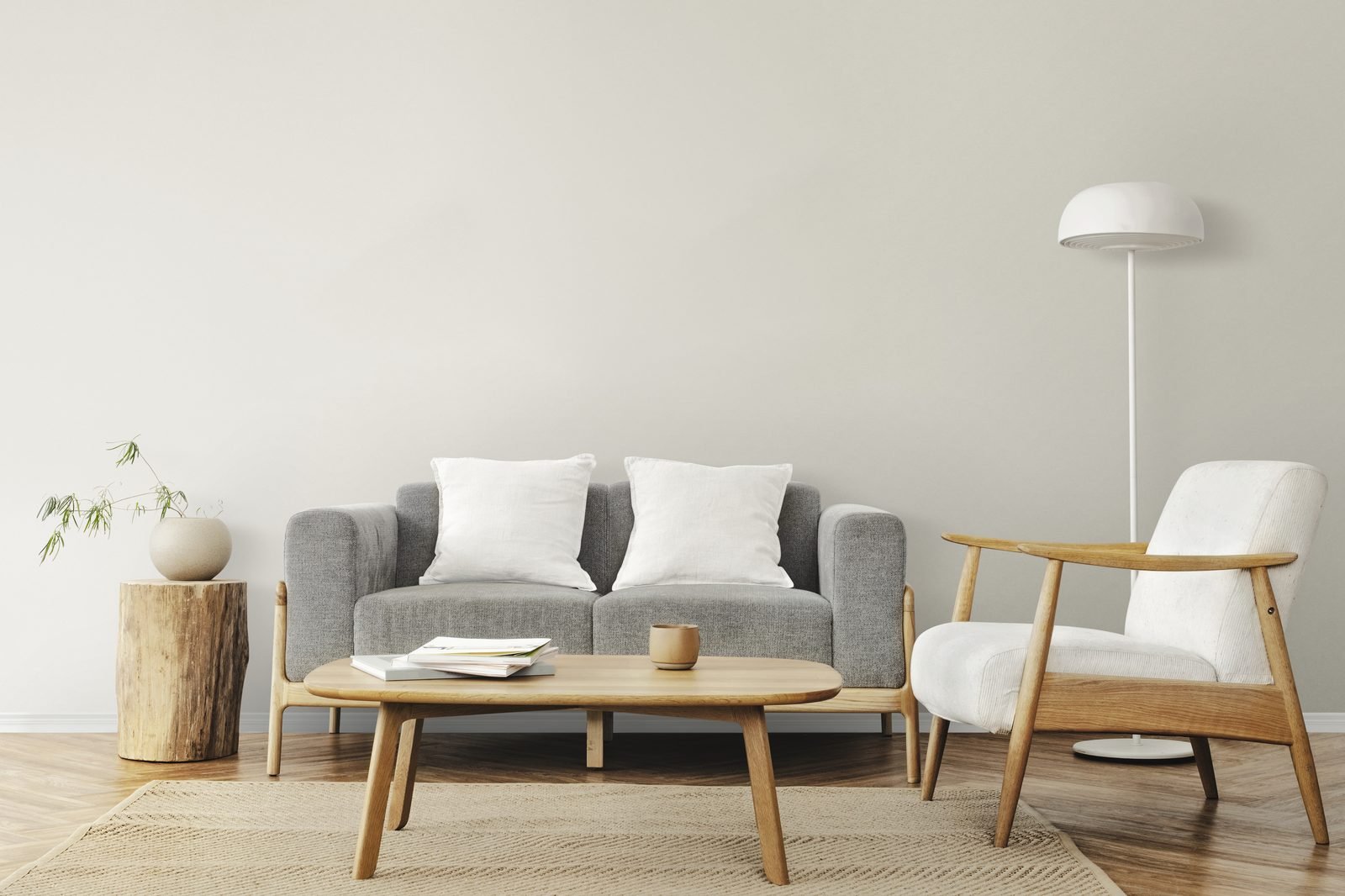
Scandinavian style was born in countries with long, dark winters, which explains its obsession with light: white or pale gray walls, light woods, natural fabrics, soft throws, plants and functional furniture. It’s simple without being cold, and that’s why it has won over so many people.
Japandi
Japandi is a fusion of Japanese and Scandinavian aesthetics. From the Japanese side come low furniture, darker woods, handmade ceramics and an appreciation for imperfection; from the Nordic side, comfort and functionality. The palette is earthy and soft, with beige, sand, olive green and small doses of black.
Rustic
Rustic style relies on materials with a raw or weathered look: reclaimed wood, stone, brick, iron, basketry and heavy fabrics. It can have a country-house or farmhouse feel and, in today’s versions, it looks lighter, paired with pale walls and contemporary pieces (often called modern rustic).
Styles with personality: industrial, boho and retro
Industrial
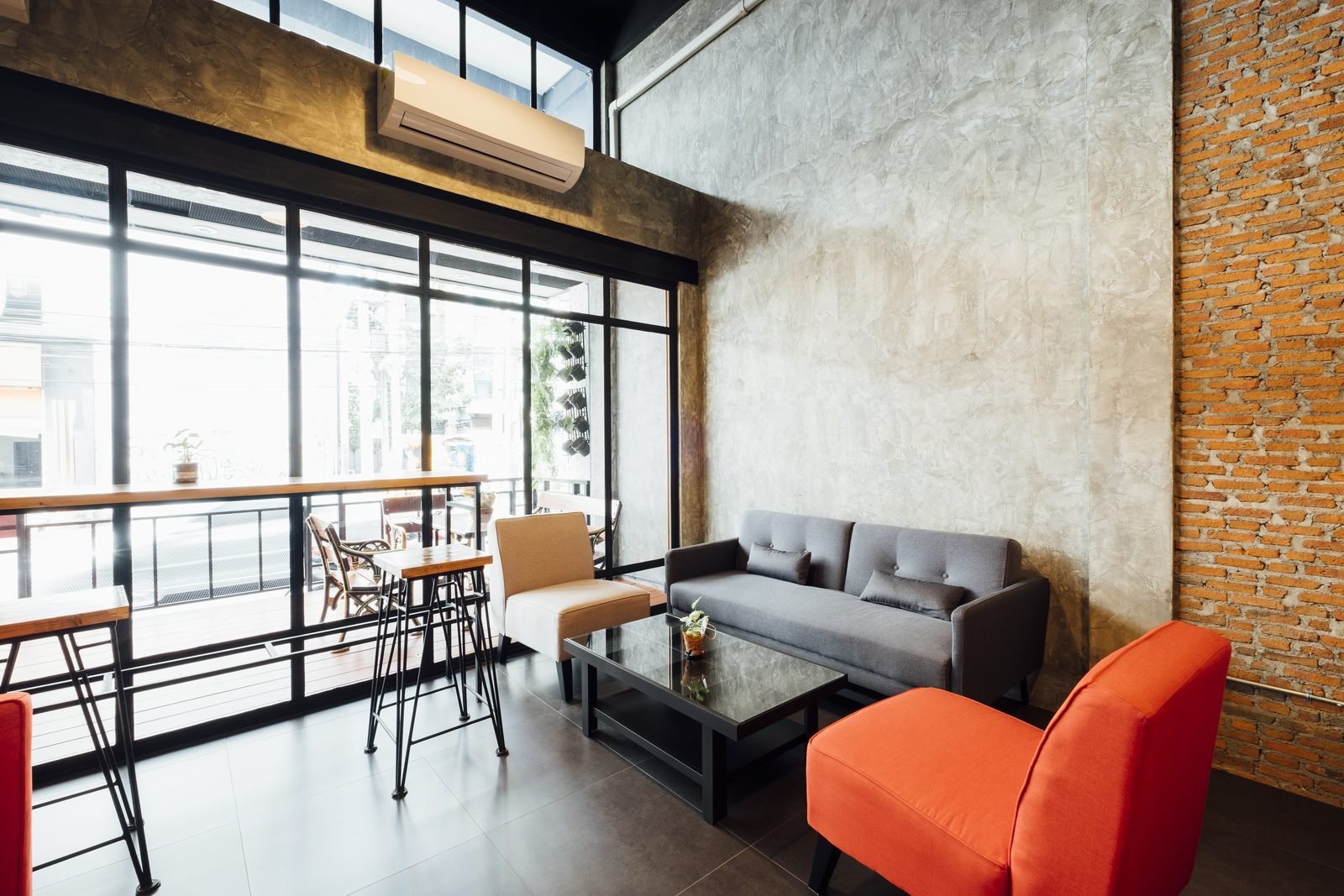
Inspired by old warehouses and factories converted into homes, industrial style celebrates what usually stays hidden: exposed concrete, bare brick, visible pipes, black metal window frames and factory-style light fixtures. To keep it from feeling heavy, balance it with wood, rugs and a bold color, like the orange armchair in the photo below. In apartments without an exposed structure, you can get the effect with concrete-look or brick-look wall finishes, track lighting and cabinetry with metalwork details.
Boho
Short for bohemian, boho is free-spirited and deeply personal. It mixes natural fibers (straw, rattan, jute), macramé, patterned rugs, lots of plants, layered pillows and objects from travels or handmade crafts. The palette tends to be earthy, with touches of terracotta, mustard and green. The lighter version, full of beige and straw, is known as boho chic.
Retro and mid-century modern
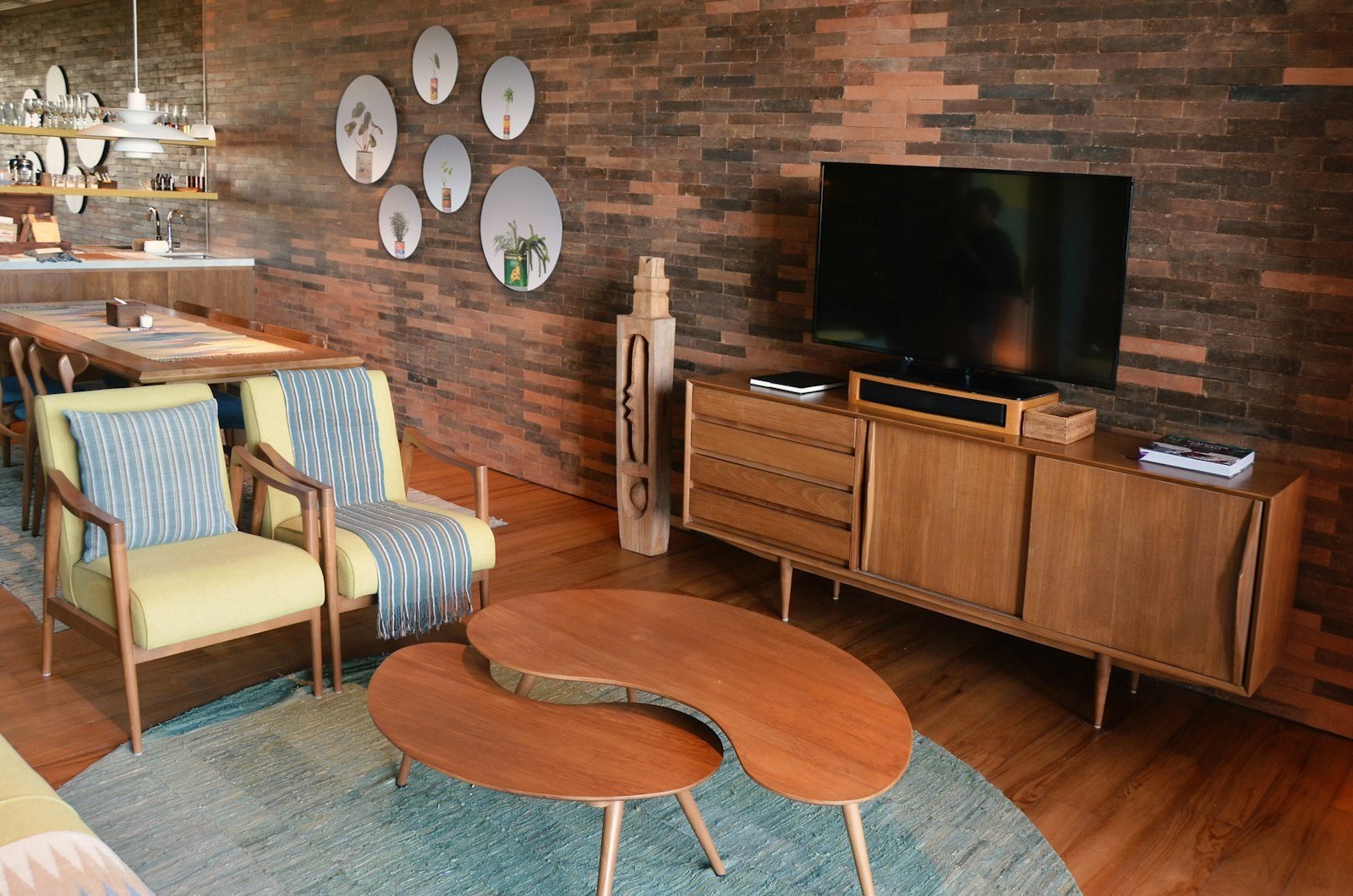
Retro revisits references from past decades, while mid-century modern draws specifically on design from the middle of the 20th century. The easiest signs to spot are slim tapered legs, organic shapes (such as the kidney-shaped coffee table), low dark-wood sideboards and colors like mustard, olive green, orange and deep teal.
Classic and neoclassical: timeless elegance
Classic style draws on traditional European references: symmetry, decorative wall moldings (boiserie), chandeliers, mirrors with ornate frames, luxurious fabrics such as velvet and silk, and carved furniture. The palette ranges from white and cream to gold, deep green and blue.
Neoclassical is the updated version and the more common of the two today: it keeps the boiserie, the symmetry and the sophistication, but with cleaner-lined furniture, less ornamentation and a light palette. It works well in apartments with high ceilings and for anyone who likes an elegant feel without going overboard. A simple way to test the style is to add moldings to a single wall, such as the one behind the bed or the sofa, before investing in furniture.
Interior design styles at a glance
Use the table to recognize a style at first sight or to check whether the pieces you plan to buy belong to the same family.
| Style | Colors | Materials | Telltale piece |
|---|---|---|---|
| Contemporary | Warm neutrals | Bouclé, linen, wood, stone | Curved sofa |
| Minimalist | White, gray, black | Lacquer, plain wood | Empty surfaces |
| Scandinavian | White, pale gray | Light wood, wool, cotton | Light wood chair |
| Japandi | Beige, sand, black | Wood, ceramics, paper | Low furniture |
| Rustic | Earth tones | Reclaimed wood, stone | Solid wood table |
| Industrial | Gray, black, rust | Concrete, metal, brick | Factory-style light fixture |
| Boho | Terracotta, mustard, beige | Straw, rattan, macramé | Wall tapestry |
| Mid-century | Mustard, olive, orange | Dark wood, leather | Tapered legs |
| Classic | Cream, gold | Velvet, marble, carvings | Boiserie and chandelier |
How to identify your interior design style
Few people fit neatly into a single style, and that’s perfectly fine. The goal is to find a main direction. Follow this checklist:
- Create a mood board: save 20 to 30 images of rooms you like, without overthinking it. Then look for what repeats: colors, woods, shapes and how many objects are on display.
- Look at what you already own: the pieces you love most usually reveal your taste better than any online quiz.
- Answer a few quick questions: do you prefer full rooms or sparse ones? Light wood or dark? Black metal or gold? Solid colors or patterns?
- Consider your routine: with kids and pets, delicate fabrics and lots of objects on display mean more work. If you have little time for cleaning, you’ll probably get along better with pared-back styles.
- Respect the home itself: the architecture, the natural light and the size of the rooms all play a part. A compact apartment calls for lighter styles; see our tips on small apartment decorating.
- Choose a main style and a secondary one: a split of roughly 80/20 keeps your home from turning into a collage.
Can you mix styles?
Yes, and the most beautiful combinations often come about exactly that way: industrial with Scandinavian, contemporary with boho, classic with modern pieces. To make the mix work, keep something in common between the pieces, such as the color palette, a repeated material or similar furniture heights. Color is a great common thread, and our guide to living room color ideas can help you choose a palette that ties everything together.
One thing people who work in real estate notice again and again: rooms with a clear, well-executed style look more organized and better cared for, while homes with many unconnected styles give an impression of improvisation, even when the furniture is expensive.
Frequently asked questions
What are the main interior design styles?
The most popular today are contemporary, modern, minimalist, Scandinavian, japandi, rustic, industrial, boho, retro or mid-century modern, and classic or neoclassical.
What’s the difference between modern and contemporary style?
Modern refers to a 20th-century aesthetic focused on function and straight lines. Contemporary is the style of the present: it incorporates current trends and changes over time.
Which interior design style is the most affordable?
Scandinavian, boho and rustic tend to be more budget-friendly, because they welcome simple furniture, thrifted finds, natural fibers and handmade pieces. The final cost, however, depends on the choices you make in each project.
Which style works best in a rental?
Styles that depend little on renovation work, such as Scandinavian, boho and contemporary, adapt well. You’ll find ideas in our guide to renter-friendly decorating that won’t damage a thing.
Conclusion
Understanding interior design styles isn’t about following rigid rules; it’s about making choices with more confidence and creating a home that truly feels like you. Which style do you identify with most, or which mix would you try? Tell us in the comments, and keep reading with our guide to living room color palettes.
Featured image: Photo: Luis J. Corniel / Unsplash
Deixe um comentário