

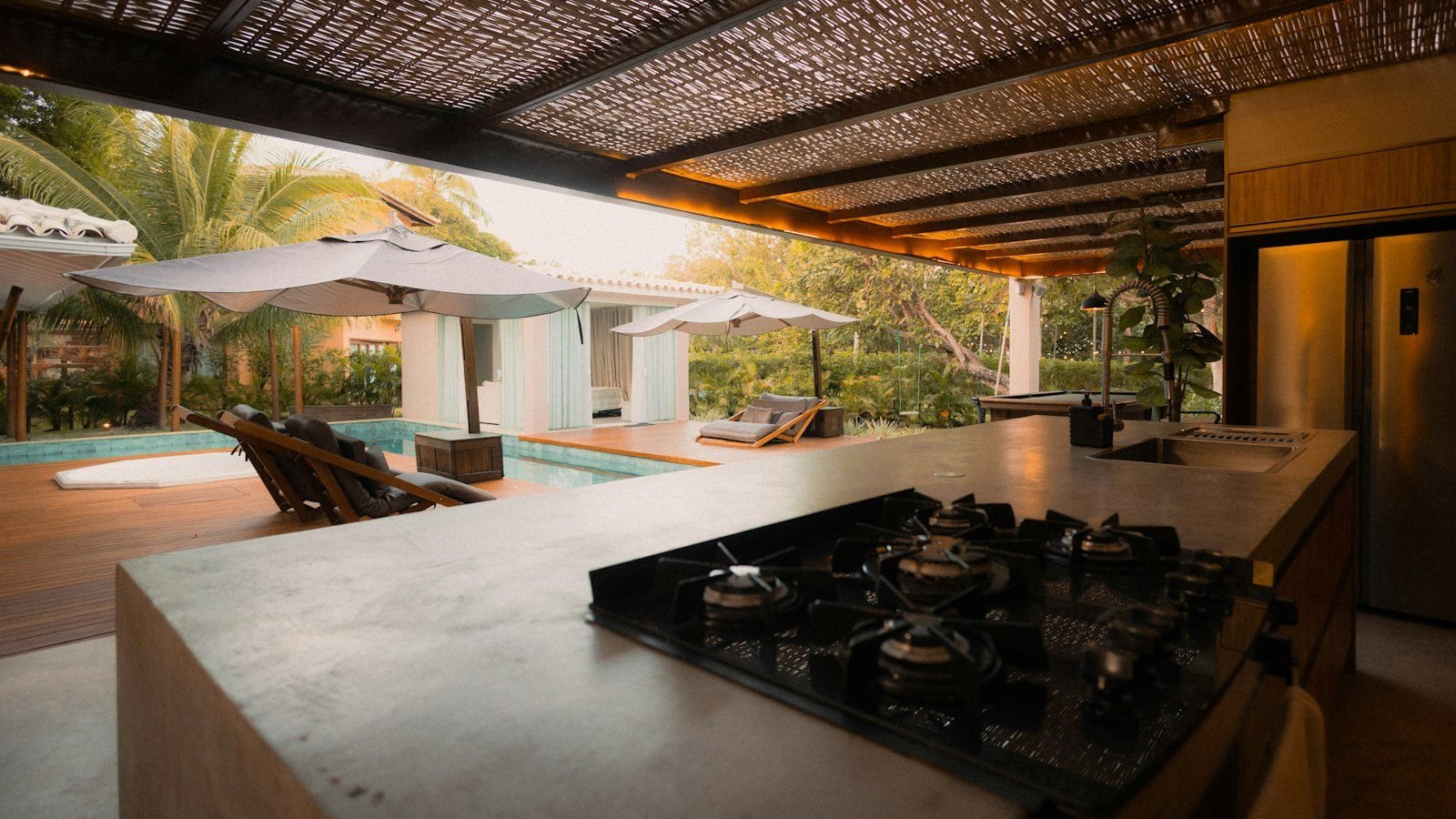
An outdoor kitchen with grill often becomes the heart of the home on weekends: it is where the family gathers, friends drop by without ceremony and the food gets ready while everyone talks. But for the space to be truly enjoyable, it needs more than a grill pushed against a wall.
In this guide, you will learn how to choose the type of grill, organize the layout, deal with smoke, pick easy-to-clean materials and keep everyone safe, whether you have a house with a backyard or an apartment with a balcony.
Start with how you will use it, not with the grill
Before thinking about finishes or models, answer three simple questions: how many people you usually host, how often the space will be used and what you cook most. If you grill for a big family every Sunday, you need a generous countertop, a sink and a fridge close by. If you host a few people now and then, a compact setup with more seating area may serve you better.
It also pays to study the spot where the outdoor kitchen will go. At a house, check the prevailing wind, the distance from bedroom windows and how much sun hits the area at the time of day you usually cook.
If your space is small or your budget is tight, our guide to budget outdoor kitchen ideas shows how to prioritize the essentials and build up over time.
Grill types: which one suits your space
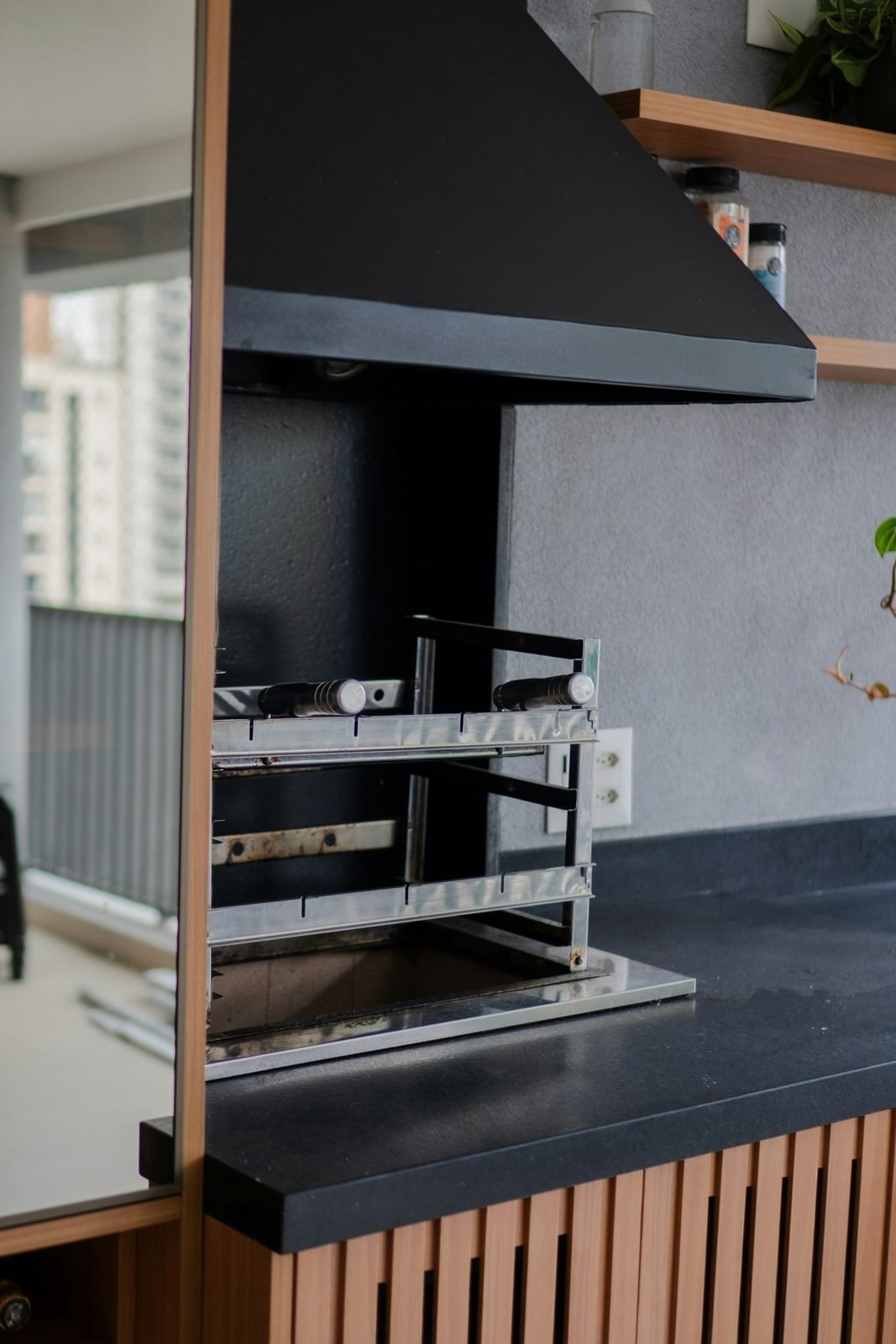
Each type of grill changes the whole project, because it defines whether you need smoke extraction, a gas line or a dedicated outlet, and even what goes on the surrounding walls. Here is a practical comparison:
| Type | Fuel | Requires | Strength | Watch out for |
|---|---|---|---|---|
| Built-in masonry or precast | Charcoal | Hood and flue for smoke | Smoky flavor and large cooking area | More smoke and more space needed |
| Kettle (with lid) | Charcoal | Well-ventilated spot | Portable, with less smoke | Takes floor space and needs careful handling |
| Gas | Gas | Installation by a licensed professional | Quick ignition and even heat | No charcoal flavor |
| Electric | Electricity | An outlet rated for its power, often 220–240V outside North America | No flue and no embers | Depends on a properly sized circuit |
| Glass-sided or wall-built | Charcoal or gas | Hood and minimum clearance | Cleaner, integrated look | More complex design and installation |
Broadly speaking, charcoal models deliver the traditional flavor but need efficient smoke extraction. Gas and electric grills produce much less smoke and tend to adapt better to semi-open spaces, as long as installation follows the manufacturer’s instructions.
Layout: the outdoor kitchen work triangle
Just like an indoor kitchen, an outdoor kitchen works best when the grill, sink and prep counter sit close together with nothing in the way. Picture a simple flow: the meat comes out of the fridge, gets seasoned on the counter, goes on the grill and returns to the cutting board without anyone crossing the dining table.
- Counter next to the grill: keep clear space on both sides, one for raw food and one for food that is ready.
- Nearby sink: makes it easy to wash hands, utensils and boards, which improves hygiene.
- Refrigeration: a mini fridge or beverage cooler saves constant trips to the indoor kitchen.
- Circulation: leave a comfortable walkway between counter and table so the cook does not bump into seated guests.
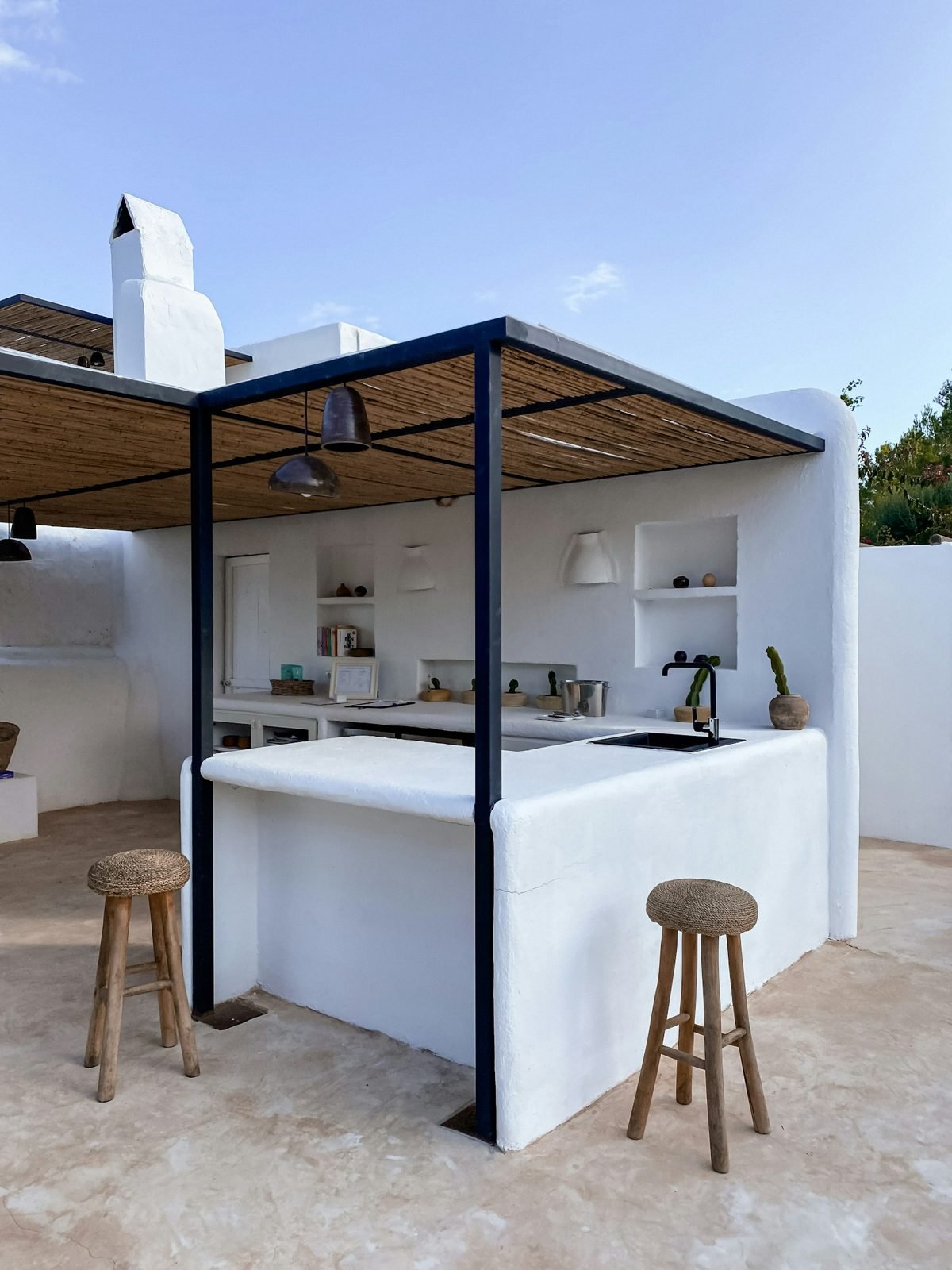
- Socializing: an island or bar with stools keeps people near the grill without getting in the way.
In narrow spaces, a single-wall layout is usually the most efficient. In larger areas, an L-shape or an island adds more counter space.
Smoke, ventilation and neighbors
Smoke is the number one source of complaints in any outdoor kitchen. For charcoal grills, the hood and flue should be sized by someone who knows the subject, with proper draft and an outlet far from windows.
In apartments, smoke is also a matter of getting along with neighbors. Many buildings and homeowners’ associations have rules about what you can use on a balcony, and smoke, smells and fire risk that affect other residents can lead to complaints or penalties. Before you buy anything, read your building’s rules and talk to the management. Some buildings are delivered with a balcony grill and a shared flue; others restrict the type of equipment allowed.
In practice, anyone familiar with real estate knows that a well-designed outdoor kitchen, built within the rules and without makeshift fixes, adds appeal to a property, while an improvised setup becomes a headache.
Safety: gas, electricity and fire
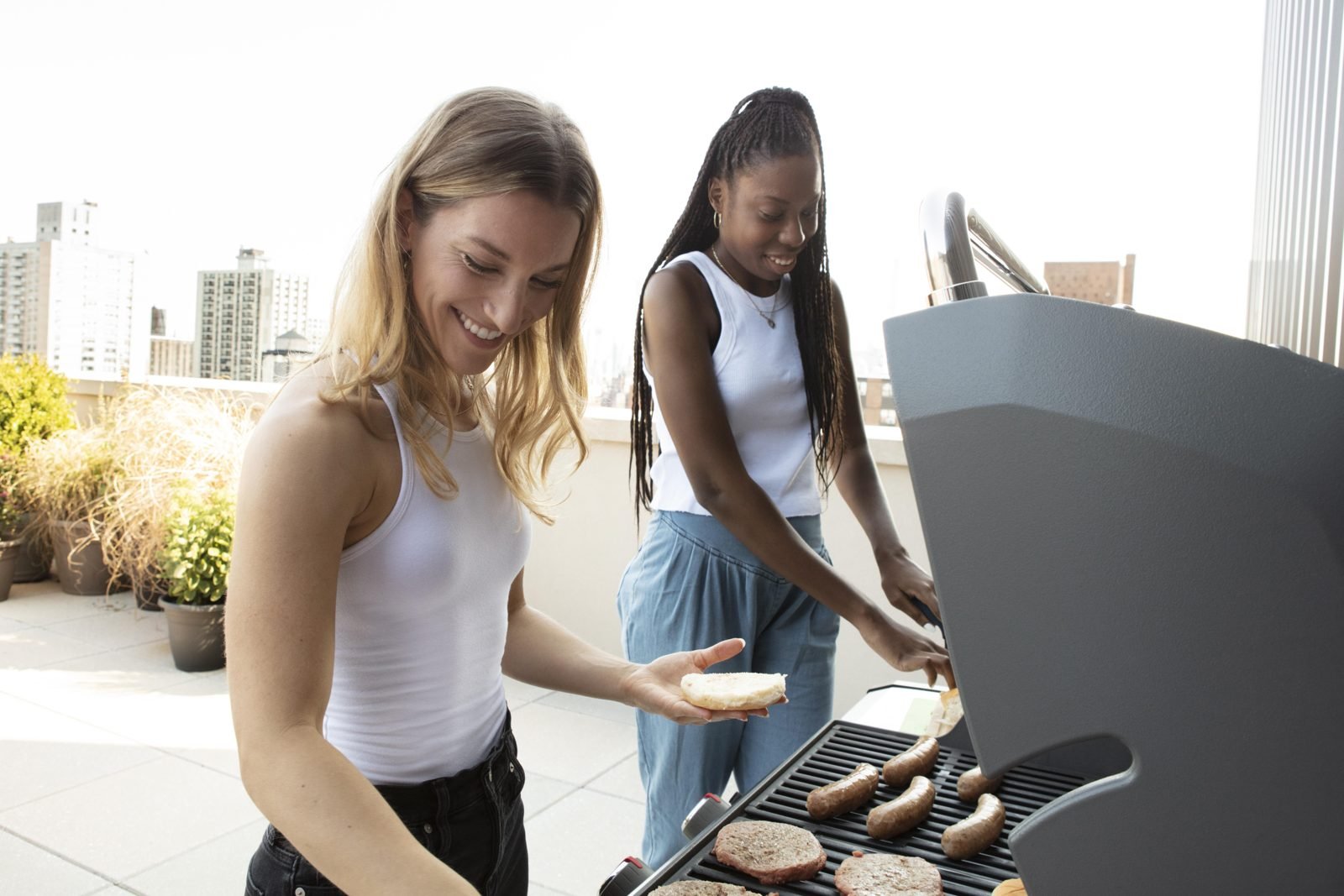
- Gas: gas grills, cooktops and ovens should be installed by a licensed professional, following the manufacturer’s manual and the rules of your utility and building. Never improvise hoses or fittings.
- Electricity: electric grills, range hoods and mini fridges may need dedicated circuits. Ask a licensed electrician to check the load and use weatherproof outlets.
- Distance from flammable materials: keep curtains, awnings, cushions and dry plants away from the grill.
- Surfaces around the fire: in the direct heat zone, use materials designed for high temperatures, such as firebrick.
- Kids and pets: set up a no-go zone around the grill while it is hot.
If you have doubts about installation or ventilation, consult a professional and follow the guidance of your local fire department.
Materials that can take the heat
Grease, soot, sun and rain are hard on any surface, so choose materials for easy cleaning.
- Countertops: dark granite, quartz and well-sealed concrete hide marks and handle hot pans. Light, porous marbles tend to stain with grease.
- Floors: choose slip-resistant finishes, especially in uncovered areas or near the sink.
- Walls: washable surfaces behind the counter make cleaning easier; exposed brick needs a sealer.
- Cabinetry: outdoors, use woods and boards rated for moisture and keep up with maintenance.
Costs vary widely depending on region, finishes and the complexity of the work, so get more than one quote before you commit to a design.
Lighting and comfort for evening use
Many cookouts start in daylight and end after dark. Plan task lighting over the grill and counter so you can check how the food is doing, plus warmer, indirect light around the table. LED strips under the counter, pendants over the island and wall sconces create layers of light that make the space feel inviting. Our guide to home lighting design helps you choose color temperatures and fixture positions.
For comfort, consider partial cover (a pergola, roof or awning) to protect against strong sun and rain, comfortable chairs for long conversations and potted plants to soften the look, kept away from the heat zone.
Checklist for planning your outdoor kitchen
- Decide how many people the space should seat comfortably.
- Check your building or homeowners’ association rules (in apartments).
- Choose a grill type that fits the space and the rules.
- Plan the hood and flue (charcoal) or gas line and electrical circuit with a licensed professional.
- Arrange grill, sink and counter in a logical sequence.
- Pick a durable, easy-to-clean countertop and floor.
- Plan both task and ambient lighting.
- Reserve room for seating and clear circulation.
If your outdoor kitchen is on a balcony, see our ideas for a small balcony outdoor kitchen to make the most of every inch.
Frequently asked questions
Can I use a charcoal grill on an apartment balcony?
It depends on the building’s design and rules. Without a proper flue, smoke tends to bother neighbors. Check your building rules and talk to management before buying or installing one.
Which grill produces the least smoke?
Gas and electric grills produce much less smoke than charcoal ones. A kettle grill with a lid also reduces smoke compared with an open grate.
Do I need a professional to install a gas grill?
Yes. Gas equipment should be installed by a licensed professional, following the manufacturer’s manual and local rules, to prevent leaks and accidents.
What is the best countertop material for an outdoor kitchen?
Heat-resistant, easy-to-clean materials such as dark granite, quartz or well-sealed concrete usually perform better than light, porous stones.
Conclusion
A well-planned outdoor kitchen with grill combines the right equipment, a practical layout, good ventilation and safety first. Once those basics are in place, decorating becomes the fun part. What does your outdoor kitchen look like, or how do you imagine it? Tell us in the comments.
Featured image: Photo: Alef Morais / Unsplash
Receba ideias de decoração no seu e-mail
Dicas práticas de decoração, jardim e organização da casa. Ao se inscrever, você recebe de presente a planilha grátis "Planejador de Decoração e Reforma". Sem excesso de e-mails.
Deixe um comentário