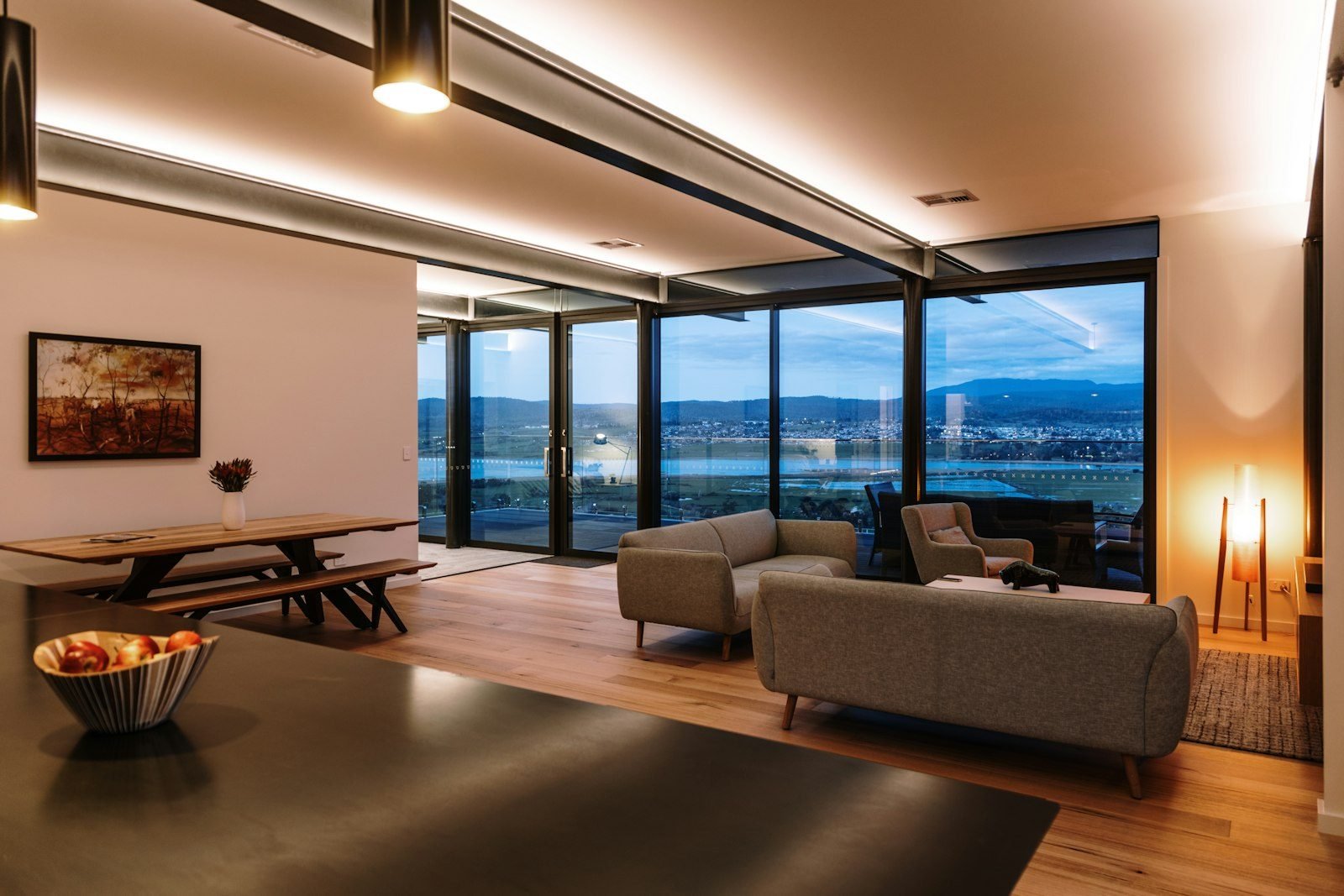
Good home lighting design changes the way you experience your home. The same living room can feel cold and dull or warm and sophisticated depending solely on where the light sources are, the color of the bulbs and how they work together. And unlike a full renovation, adjusting your lighting usually takes very little construction work.
In this guide, we explain in practical terms the concepts that architects and lighting designers use every day, such as layers of light, color temperature and CRI, and show what works in each room. That way, you can talk more confidently with the professional who will carry out the project, or plan small changes on your own.
The three layers of light
Many homes rely on a single central ceiling fixture, which lights everything flatly and leaves shadows in the corners. A well-planned scheme works with layers that can be switched on separately, depending on the moment.
Ambient lighting
This is the foundation: it lets you move around and see the room safely. It can come from flush-mount ceiling lights, recessed downlights, track lighting or cove lighting that bounces light off the ceiling. The idea is to spread light evenly, without very dark areas.
Task lighting
This is focused light wherever you do something specific: the kitchen counter, the desk, the bathroom mirror, the reading chair. It needs to be brighter and well positioned so it doesn’t cast shadows over whatever you’re doing.
Accent and decorative lighting
This layer highlights textures, artwork, plants and objects, and it creates atmosphere. It includes LED strips in niches and cabinetry, low step or path lights, wall sconces and table lamps. It’s the layer that adds depth and makes a home feel welcoming at night.
In practice, having separate circuits for each layer and, where possible, dimmers compatible with your bulbs lets you create different scenes: bright light for cleaning, medium light for entertaining and low light for watching a movie.
Color temperature: what kelvin means
Color temperature, measured in kelvin (K), describes the tone of the light, from yellowish to bluish. It has nothing to do with brightness or energy use: the amount of light is given in lumens, and power consumption in watts. That’s why it pays to read the packaging carefully.
| Temperature | Appearance | Where it usually works |
|---|---|---|
| 2700K | Warm white, yellowish | Living rooms and TV rooms, bedrooms, relaxation areas |
| 3000K | Warm white, slightly crisper | Dining rooms, bedrooms, powder rooms, accent lighting |
| 4000K | Neutral white | Kitchens, bathrooms, laundry rooms, home offices |
| 6000K to 6500K | Cool white, bluish | Utility areas and workspaces that demand focus |
As a general rule, warm light (up to 3000K) suits bedrooms, living rooms, dining rooms and TV rooms, while bathrooms, kitchens and laundry areas can take neutral or cool light. More important than following the table to the letter is consistency: mixing bulbs of different color temperatures in the same room tends to make the space look mismatched.
CRI: why color accuracy matters
CRI (color rendering index) indicates how faithfully a light source reveals the colors of objects, on a scale of 0 to 100. Natural daylight outdoors is the benchmark, with a CRI of 100. The lower the number, the duller or more artificial colors look.
- CRI between 80 and 90: a common range for bulbs in homes, hotels and offices, and suitable for general use around the house.
- CRI of 90 or higher: helps you notice subtle differences in color. It’s worth it in walk-in closets, makeup vanities, kitchens, studios and on walls with artwork.
CRI also affects how your decor comes across. A carefully painted wall can look lifeless under a low-CRI bulb. If you’re choosing paint, test the samples under the final lighting; our guide to living room color ideas includes a checklist for exactly that.
Lighting room by room
Living room and TV room
Combine soft ambient light, such as cove lighting or spotlights aimed at the walls, with table lamps and floor lamps. Avoid spotlights pointed at the sofa or reflecting on the TV screen. Soft, indirect light behind or beside the TV wall tends to ease the contrast between the screen and its surroundings, making movie night more comfortable.
Dining room
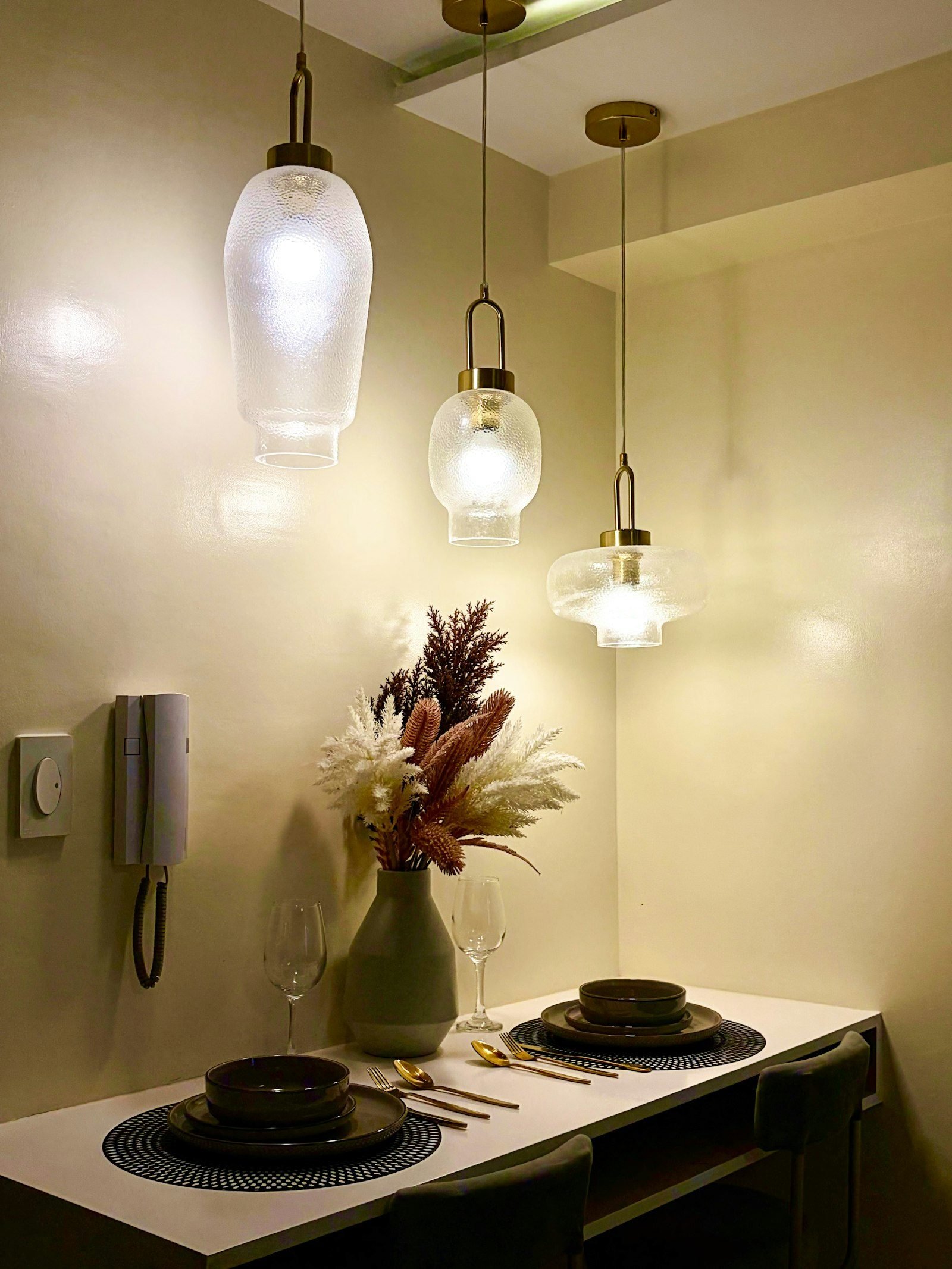
The pendant over the table is the centerpiece. It should light the tabletop without glaring into the eyes of anyone seated, and the width of the fixture (or the group of pendants) should be in proportion to the size of the table. Warm, dimmable light flatters food and makes dinner more pleasant.
Kitchen
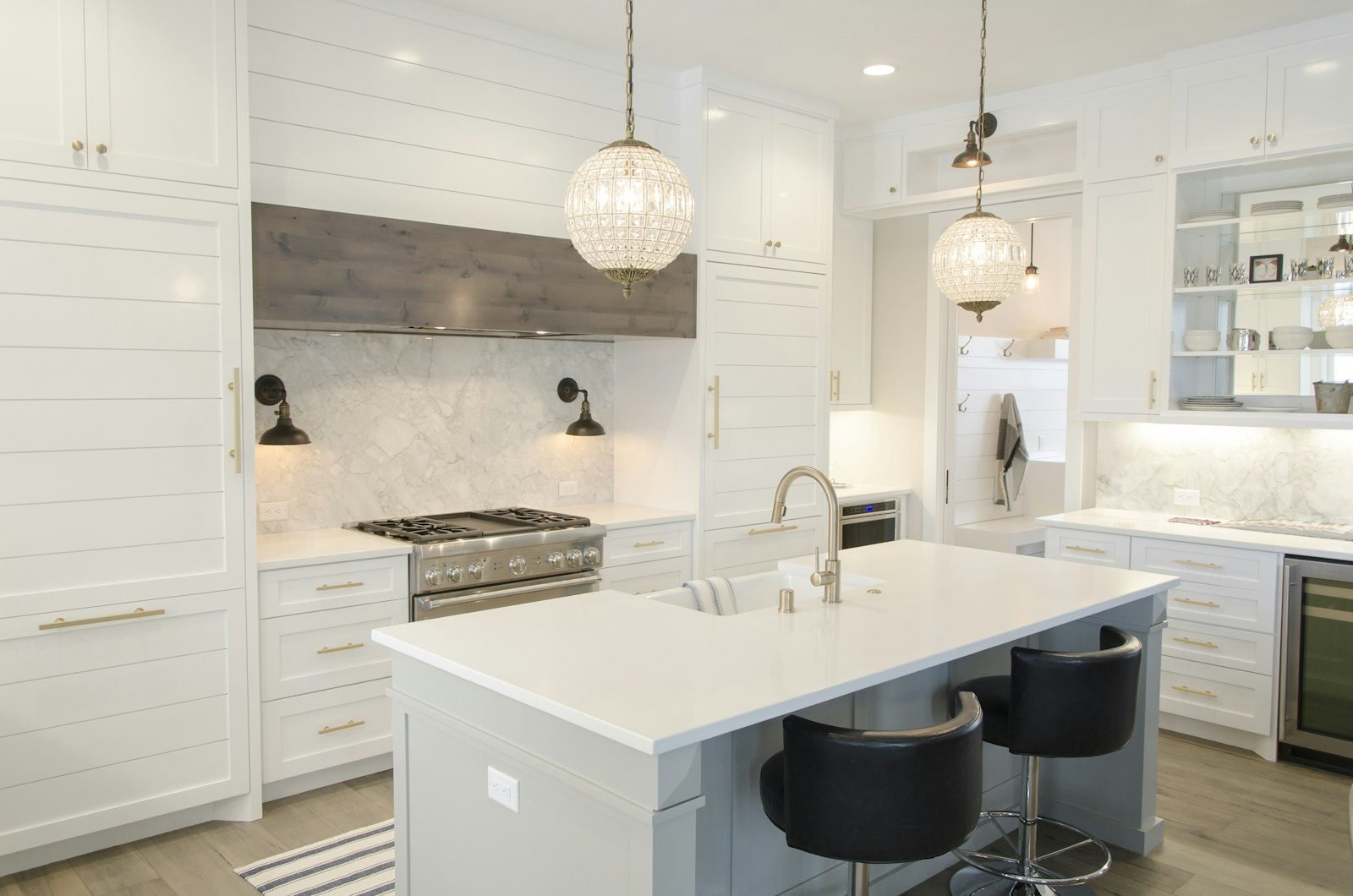
Here, task lighting is essential. LED strips or channels under the upper cabinets light the countertop without your head casting a shadow, which is exactly what happens with a single central fixture behind you. Pendants over the island or breakfast bar complete the scheme. For more ideas for compact spaces, see our article on small kitchen ideas.
Bedroom
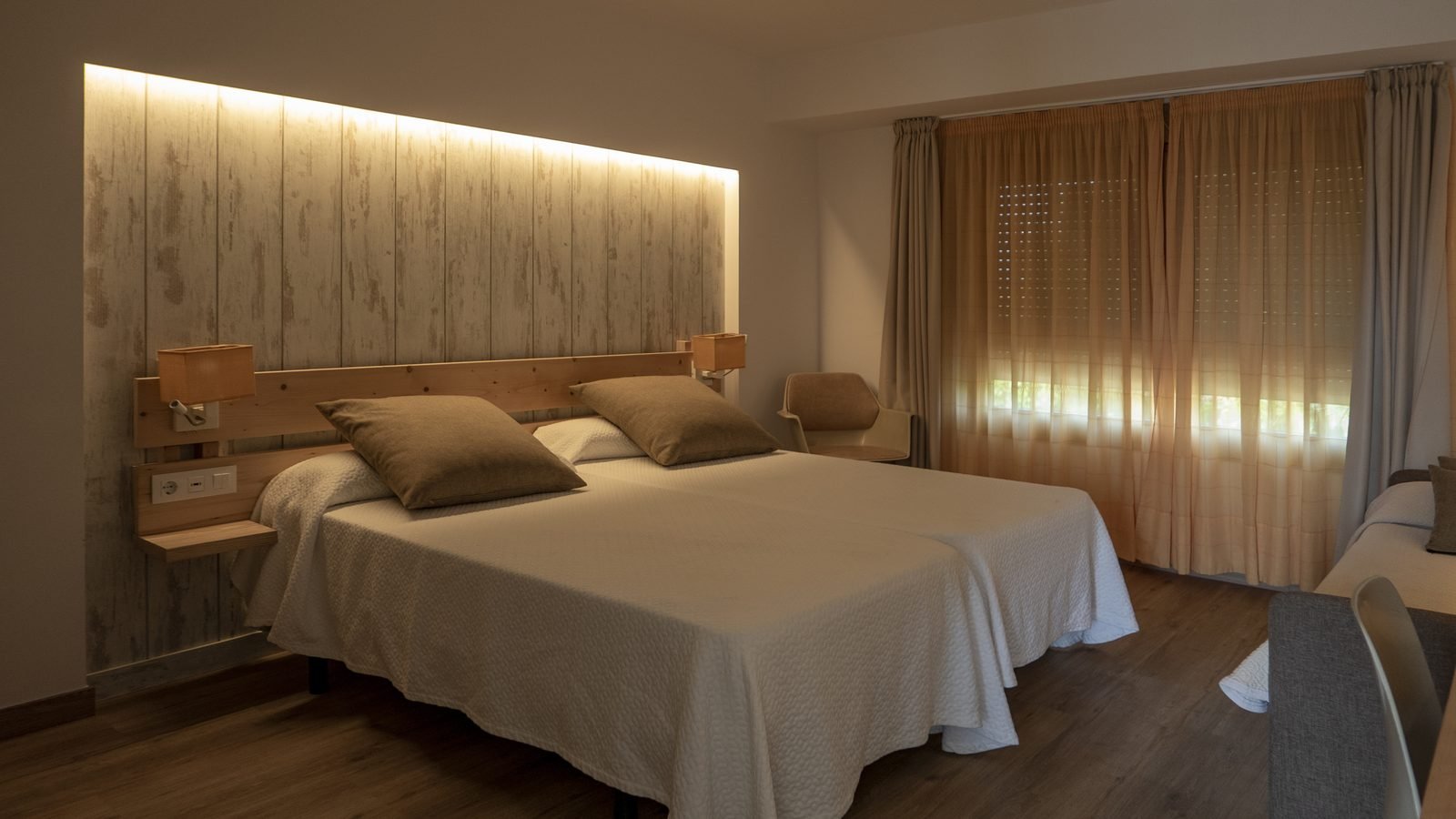
Prioritize warm, indirect light. An LED strip behind the headboard or in a ceiling cove creates soft ambient light, and wall sconces or adjustable lamps take care of reading without disturbing a partner who wants to sleep. Three-way switches at the door and by the bed save you from getting up in the dark. Find more inspiration in our guide to master bedroom decorating ideas.
Bathroom
The most important spot is the mirror: light from the front or the sides illuminates your face evenly, while a spotlight directly overhead creates shadows under the eyes. Neutral light with a high CRI helps with makeup and shaving. In wet areas, use fixtures rated for damp or wet locations.
Home office
Pair good ambient light with a desk lamp placed on the side opposite your writing hand, and avoid glare on the screen. Neutral light, around 4000K, supports concentration. If you’re setting up a dedicated workspace, a lighting professional can help you size the light for the work area.
Checklist for planning your home lighting
- List the activities that happen in each room before choosing fixtures.
- Plan at least two layers of light per room, on separate circuits.
- Pick one color temperature per room and keep all the bulbs matching.
- Compare bulbs by lumens, not by watts.
- Choose a CRI of 80 or higher, and 90 or higher wherever color matters.
- Make sure a bulb is dimmable before installing a dimmer.
- Avoid light shining directly into people’s eyes, especially over the sofa, the bed and the dining table.
- Follow local electrical codes and hire a licensed electrician for any change to your wiring.
That last item deserves emphasis: new fixtures, coves and circuits require properly sized wiring and circuit protection, and mistakes can cause overloads or a risk of electric shock. And from a real estate perspective, well-planned lighting is also one of the details that adds the most appeal to a home during showings, because it makes rooms look larger and better finished.
Frequently asked questions
Do I need a professional to design my home lighting?
For new builds and larger renovations, yes: architects and lighting designers integrate the light with the layout and the cabinetry. To swap bulbs or add lamps, you can apply the principles in this guide yourself. Any change to the electrical installation should always be left to a licensed electrician.
What’s the best color temperature for a living room?
For living rooms and TV rooms, warm light between 2700K and 3000K is usually the best choice, because it creates a cozy, relaxing atmosphere.
Can I use cool white light at home?
You can, but in specific areas such as the laundry room and the garage. In living rooms and bedrooms, cool light tends to make the space feel impersonal at night.
What does CRI mean on a light bulb package?
It stands for color rendering index, measured on a scale from 0 to 100. The closer to 100, the more natural colors look under that light.
Conclusion
Effective home lighting design comes from combining layers of light, a consistent color temperature and bulbs with good color rendering, always planned around the daily routine of the people who live there. Which room in your home needs new light the most? Tell us in the comments, and take a look at our guide to living room color ideas.
Featured image: Photo: S.Group Official / Unsplash
Deixe um comentário