
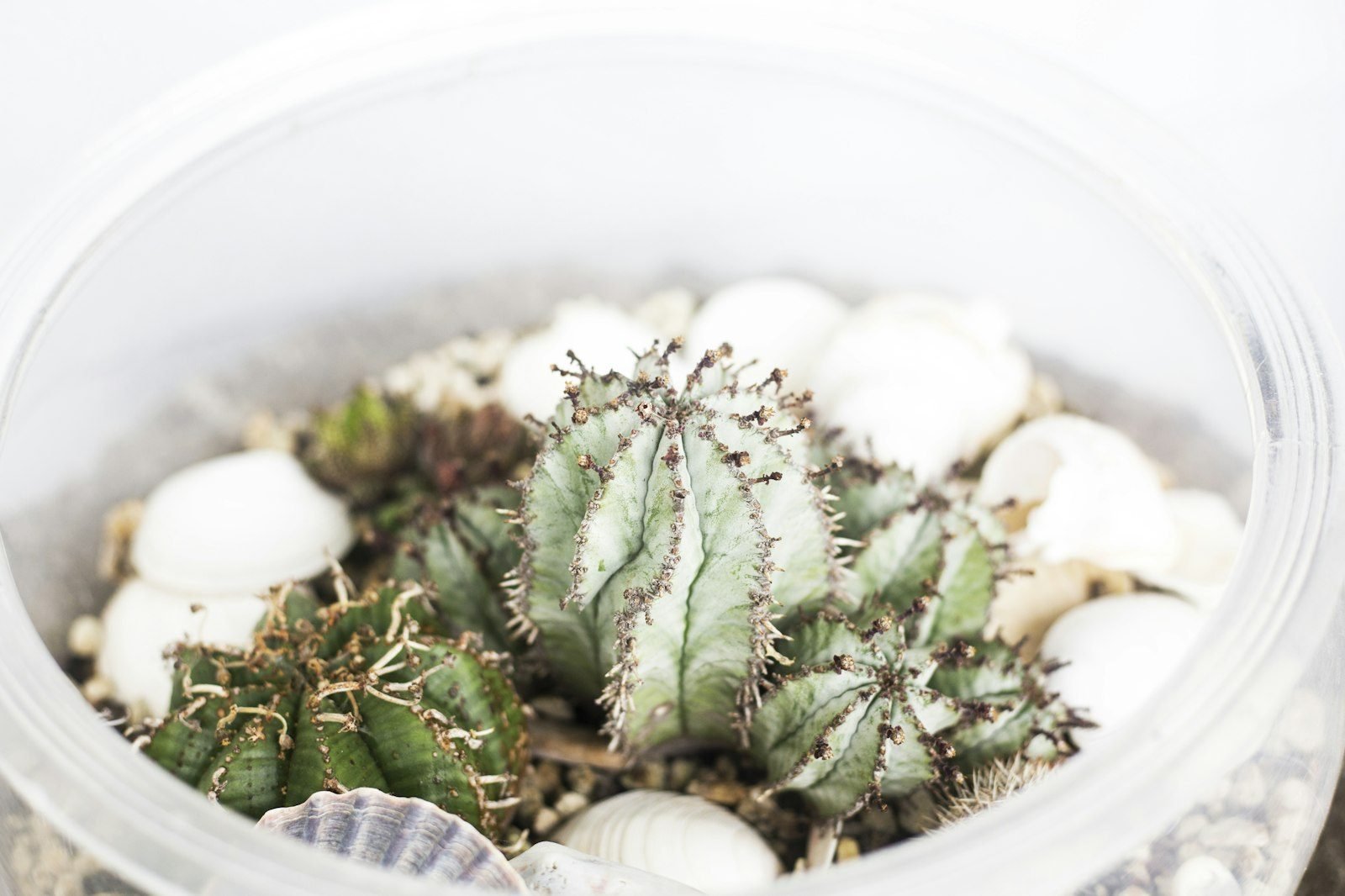
A succulent terrarium is a tiny garden inside a glass container. It fits on a desk, a console table or a bookshelf and brings greenery into your home without taking up floor space. Built well, it needs little water and almost no pruning, which makes it a great first project if you are just starting out with plants.
The key is remembering that succulents and cacti come from dry, bright environments. Their terrarium follows different rules from a closed tropical one. In this guide, you will learn how to choose the container, layer it in the right order, combine plants, find the right spot and water without rotting the roots.
Open or closed: which terrarium works for succulents
This first decision matters most. Closed terrariums trap moisture and act like a small greenhouse, which suits ferns, mosses and other tropical plants. Succulents need moving air and a mix that dries out between waterings. University extension guides, such as those from the University of Florida (UF/IFAS), recommend open containers for plants that prefer little water.
In practice, choose:
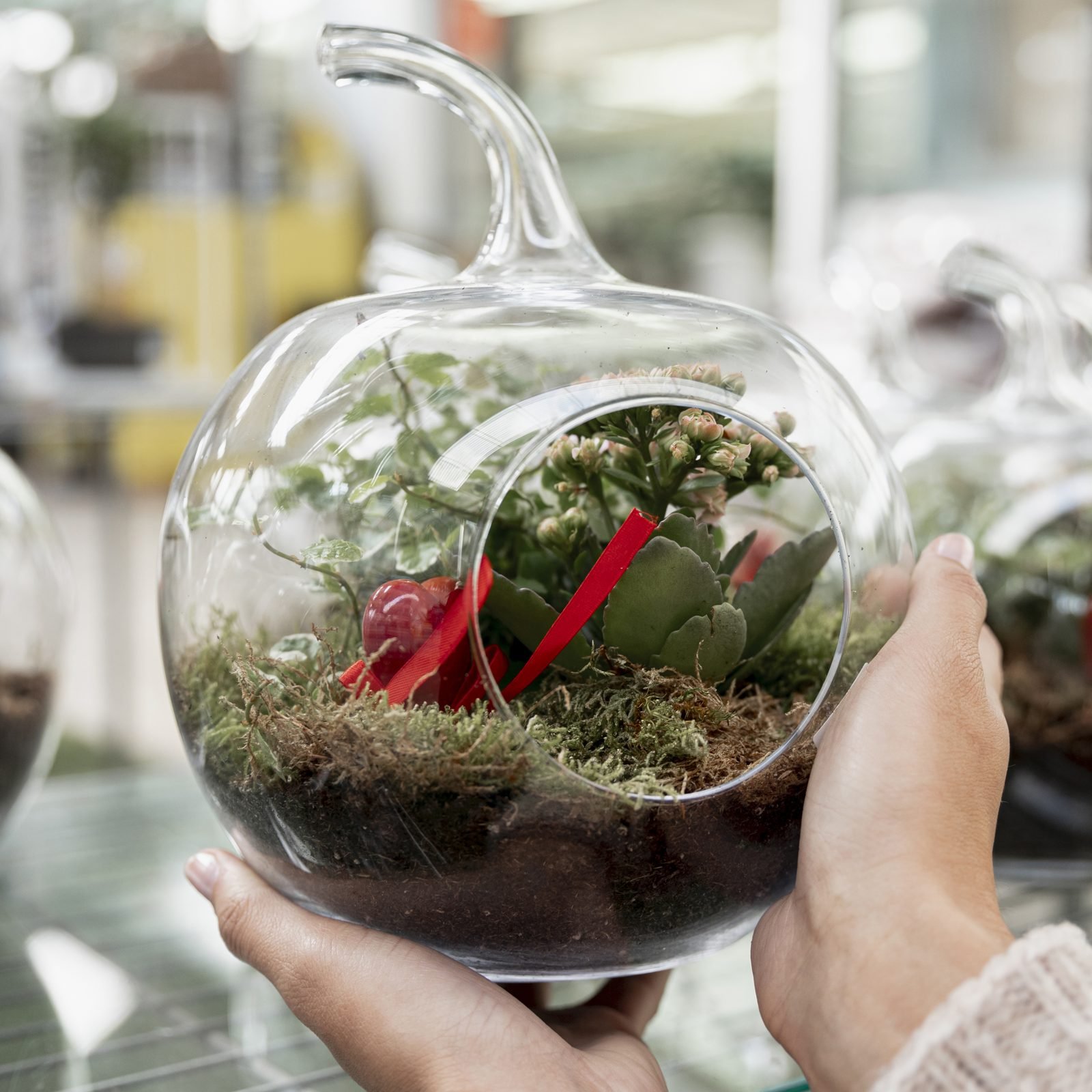
- Fishbowls and glass globes with a wide opening, which let air flow and make planting easier;
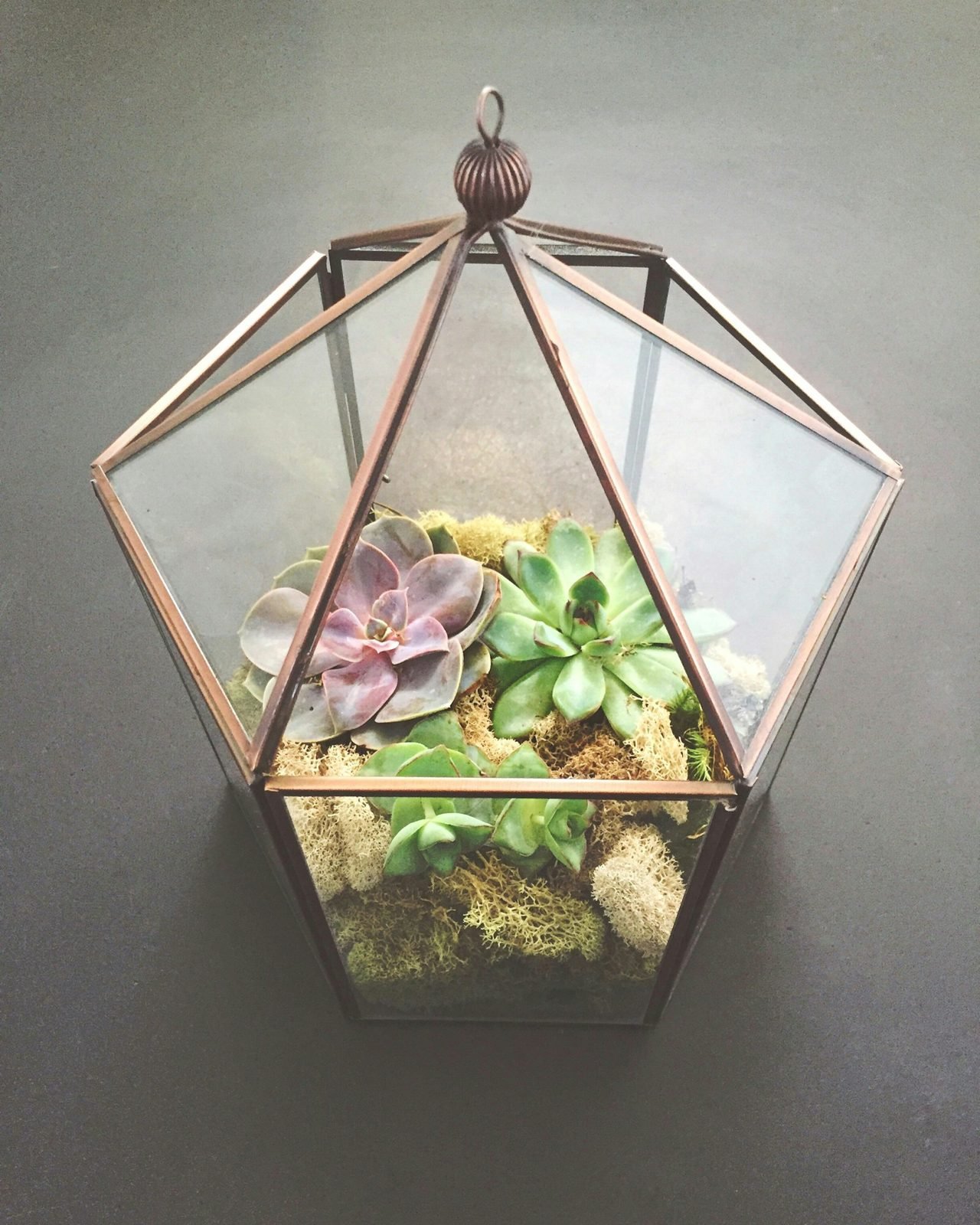
- Geometric terrariums with one open side, a popular decor choice;
- Glass jars, bowls and dishes without a lid, as long as the opening fits your hand or a pair of tongs.
Fogged glass on the inside is a sign of too much humidity, so keep any lid off.
What you will need
Before you start, lay everything out on a surface covered with newspaper or an old towel. Use this checklist:
- A clean, dry glass container with a wide opening;
- Pea gravel, expanded clay pebbles or fine gravel for drainage;
- A drainage mesh or a thin piece of synthetic fabric to separate the layers;
- A gritty potting mix made for cacti and succulents;
- Very small succulent plants and, if you like, mini cacti;
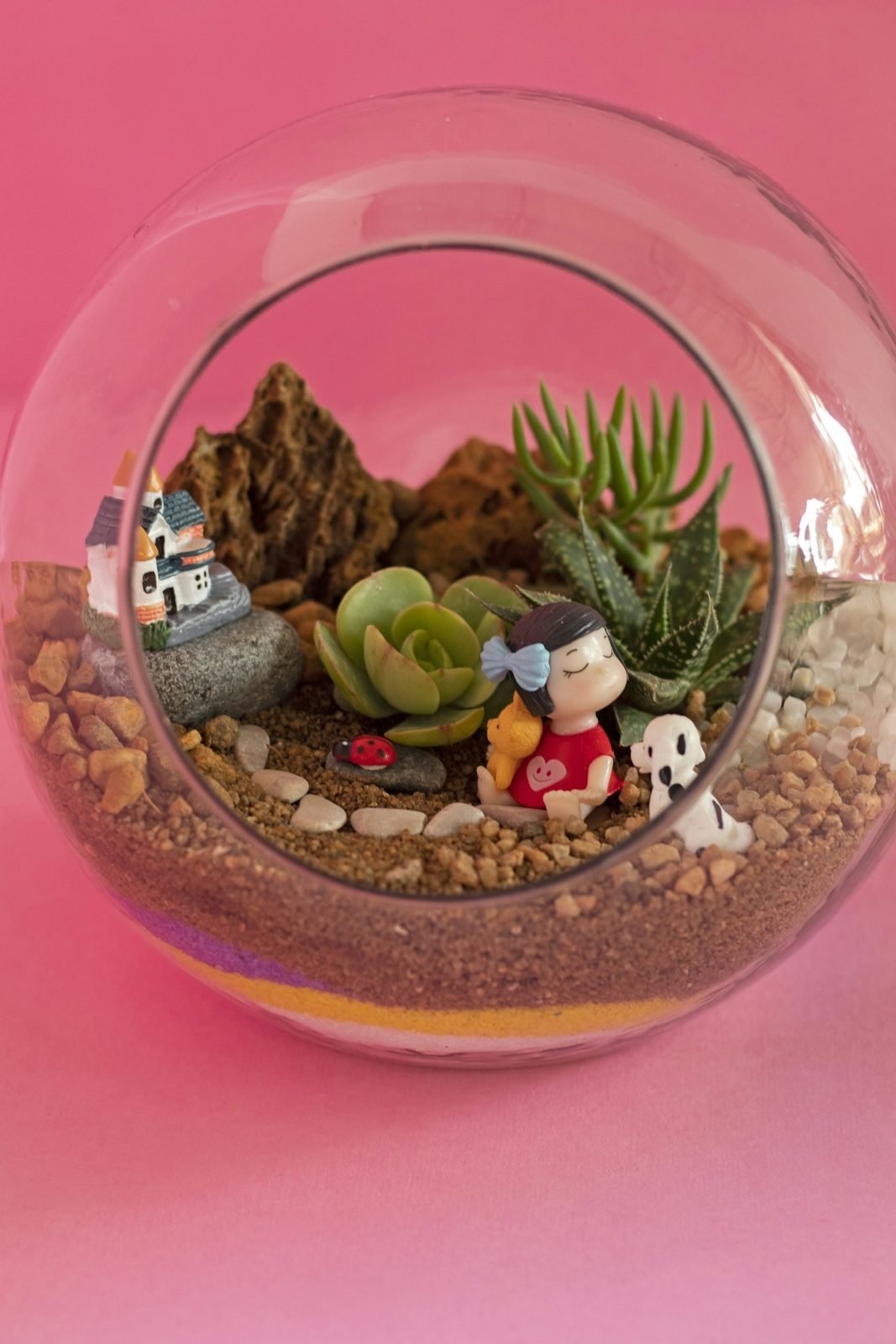
- Colored sand, small pebbles or stones for a decorative top layer (optional);
- Long tweezers, a small spoon, a soft brush and thick gloves for handling cacti;
- A spray bottle or a needle-free syringe for precise watering.
How to make a succulent terrarium, step by step
Assembly takes less than an hour. Follow this order:
- Clean the glass inside and out. Fingerprints become very visible once the soil is in.
- Add the drainage layer. Since the container has no hole, extra water needs somewhere to go. A layer of gravel about 1.5 to 4 cm (roughly 1/2 to 1 1/2 inches) deep, depending on the size of the container, does the job.
- Cover it with the mesh so the soil does not sink and clog the gaps between the stones.
- Add the potting mix, deep enough to bury the roots. Shape small slopes to give the arrangement depth.
- Plan the layout outside the glass. Try the plants on the table first: taller ones at the back or center, low-growing ones in front.
- Plant with tweezers or a spoon, digging a small hole, settling the roots and gently firming the soil around them.
- Finish the top layer with pebbles, stones or sand. Besides looking good, it helps keep the base of the plants dry.
- Brush the leaves and the glass clean and wait a few days before the first watering so any damaged roots can heal.
Terrarium layers and what each one does
The table below sums up the job of each layer:
| Layer (bottom to top) | Material | Purpose |
|---|---|---|
| Drainage | Pea gravel, small stones or expanded clay | Holds excess water away from the roots |
| Separator | Drainage mesh or synthetic fabric | Stops the soil from sinking into the drainage |
| Charcoal (optional) | Horticultural charcoal, in a thin layer | Mainly for closed terrariums, where it helps prevent odors; not needed in open ones |
| Potting mix | Cactus and succulent mix | Anchors the plants and dries quickly between waterings |
| Top dressing | Pebbles, stones or sand | Decorative finish that also protects the base of the plants |
In a small container, scale every layer down in proportion, but never skip the drainage.
Which succulents work well in a terrarium
Group compact plants that share the same light and water needs. Some popular options:
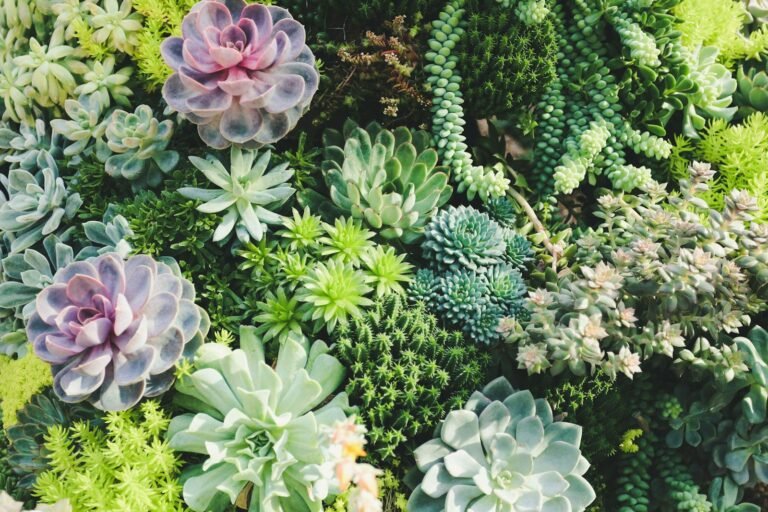
- Echeverias (Echeveria spp.): rosettes in shades of green, blue and pink that grow slowly.
- Haworthias (Haworthia and related genera): handle a little less light than many succulents and do well near bright windows.
- Hens and chicks (Sempervivum): form small clusters of rosettes.
- Small-leaved sedums (Sedum): fill gaps and add texture.
- Mini cacti: share the same watering routine but often need even more light.
To get to know each type better, read our complete guide to succulent care.
Keep pets and children in mind
According to the ASPCA, the jade plant (Crassula ovata), string of pearls (Senecio rowleyanus) and pencil cactus (Euphorbia tirucalli) are toxic to dogs and cats. Echeverias and Sempervivum are listed as non-toxic, although the organization notes that even non-toxic plants can cause stomach upset if eaten. If you have pets or small children, keep the terrarium out of reach and choose spineless plants. If a plant is swallowed, contact a veterinarian or a doctor.
Where to place your terrarium: light and temperature
Succulents need plenty of light. Indoors, the best spots are usually near bright windows. The catch is the glass: in strong, direct sun it heats the inside of the container and can scorch the leaves. That is why extension guides recommend bright but indirect light for terrariums.
Signs that help you adjust the spot:
- Stretched, pale or leaning plants are not getting enough light;
- Brown or bleached patches on the leaves may be sunburn;
- Fogged glass means high humidity: improve airflow and water less often.
Rotate the terrarium now and then so every plant gets even light. If your home has little natural light, also see our list of the best plants for apartments, with options for every kind of room.
How to water without rotting the roots
Watering is where most succulent terrariums fail. With no hole in the bottom, every drop you add stays in the container. The rule is simple: water only when the mix is almost dry, and use very little.
- Test the soil with your finger or a wooden skewer: if it comes out damp, wait.
- Apply water with a syringe, dropper or spoon directly at the base of each plant, avoiding the rosettes.
- Small, well-spaced waterings work best; how often depends on the season, the light and the size of the container.
- If you can see water pooling in the drainage layer, stop watering until it dries out.
Soft, translucent or darkened leaves at the base usually point to overwatering. Remove the affected plant right away so the problem does not spread.
Upkeep and styling ideas
Maintenance is light: pick off dry leaves with tweezers, wipe the outside of the glass with a soft cloth and, when a plant outgrows the space, move it to a regular pot. If you fertilize at all, do it rarely and well diluted, since the goal is slow growth.
In your decor, a terrarium works as a focal point on side tables, consoles, shelves and desks. Several small terrariums grouped at different heights create a more interesting display than one large piece. It can also become a centerpiece for special occasions; see ideas in our article on Christmas table decorations.
Frequently asked questions
Does a succulent terrarium need sun?
It needs plenty of brightness. Bright, indirect light near a well-lit window is ideal, avoiding strong direct sun on the glass during the hottest hours.
Can I close a succulent terrarium?
It is not recommended. A closed container builds up moisture, which encourages fungus and rot. For succulents and cacti, always keep the terrarium open.
How often should I water it?
There is no fixed schedule. Water only when the mix is almost dry, adding a small amount at the base of the plants. In cooler or dimmer spots, waterings should be spaced out even more.
How long does a succulent terrarium last?
With good light and careful watering, it can last a long time. As the plants grow, some will eventually need to be replaced or moved to larger pots.
Conclusion
An open container, good drainage, a gritty mix, plenty of light without harsh sun on the glass and restrained watering: that is the foundation of a beautiful, long-lasting succulent terrarium. Have you made one yet? Tell us in the comments which plants you chose, and explore our other plant guides.
Featured image: Photo: deanna alys / Unsplash
Receba ideias de decoração no seu e-mail
Dicas práticas de decoração, jardim e organização da casa. Ao se inscrever, você recebe de presente a planilha grátis "Planejador de Decoração e Reforma". Sem excesso de e-mails.
Deixe um comentário