

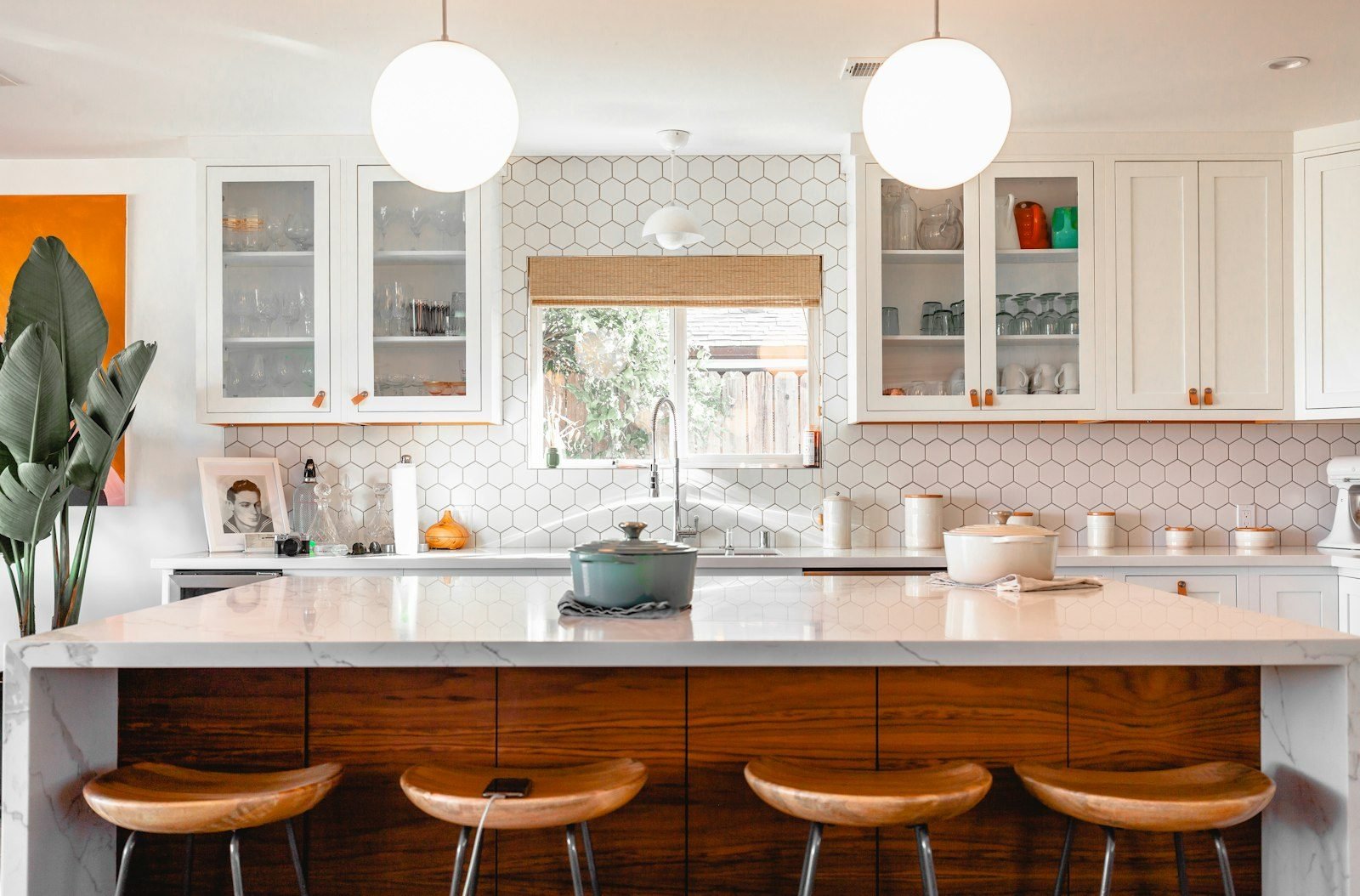
The kitchen is the room that most deserves personality, and it is also the room that is hardest on finishes: steam, sauce splatters, grease and wet hands are part of daily life. That is why choosing a washable kitchen wallpaper is not a technical footnote — it is what separates a wall that looks good for years from one that is stained within a few months.
In this guide, you will learn what the symbols on the label mean, which materials hold up best, where to hang wallpaper (and where not to), how to pair patterns with cabinetry and tile, and how to clean it without ruining the finish.
What makes wallpaper truly washable
Not every wallpaper sold as “durable” can handle a damp cloth and dish soap. Washability depends mainly on the surface layer. Standard paper wallpapers absorb water and stain easily. Vinyl (PVC) or coated papers, on the other hand, form a film that keeps dirt from soaking into the fibers.
For a kitchen, look for these three features together:
- A vinyl or coated surface, so you can clean it without fading the print.
- Good moisture tolerance, since cooking steam is constant.
- A stable backing, such as non-woven, which moves less as humidity changes and makes future removal easier.
How to read the washability symbols on the label
Manufacturers print standardized pictograms on the label or on the back of the sample. Wavy lines stand for water; the brush means the material can take some scrubbing. Names vary from brand to brand, so always check the manufacturer’s own key.
| Symbol | What it means | Kitchen-friendly? |
|---|---|---|
| 1 wave | Water-resistant: only a light dab with a damp sponge, no rubbing | Not recommended |
| 2 waves | Washable: light marks come off with a damp cloth | Only on walls far from food prep |
| 3 waves | Highly washable: mild soapy water is fine | Yes, if you cook lightly or away from the counter |
| 1 wave + brush | Scrubbable with a soft brush and soapy water | Yes, the safest choice |
| 3 waves + brush | The highest level of cleaning resistance | Yes, for busy kitchens |
One important note: even the most washable papers can struggle with old grease stains. Wiping splatters as soon as they happen makes all the difference.
The best materials for kitchens
Vinyl
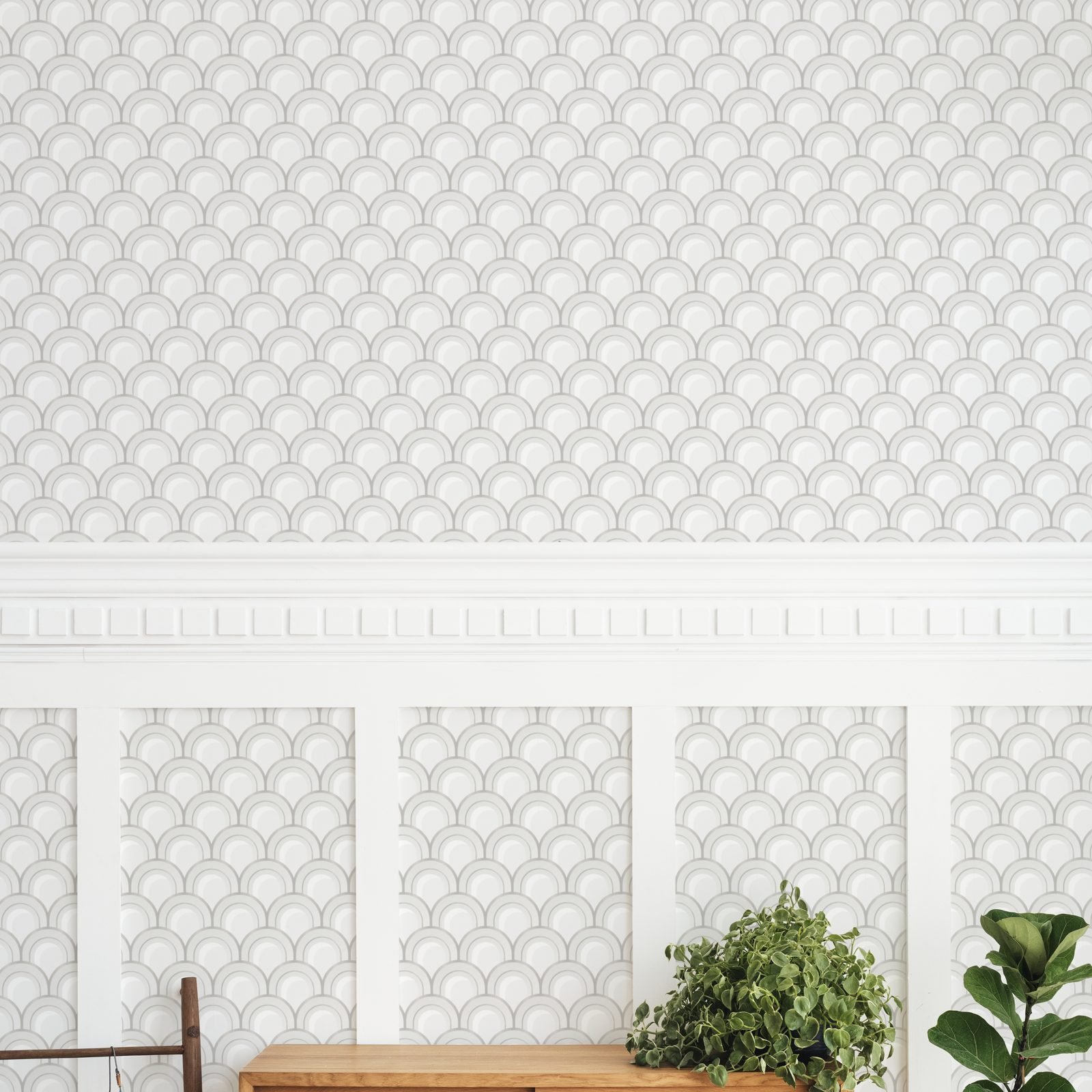
This is the top pick. The vinyl layer handles frequent cleaning, resists moisture better and often comes in textured versions that mimic tile, wood, concrete or linen. Choose non-woven-backed options, which are easier to hang and to remove.
Peel-and-stick vinyl
Handy for renters or anyone who wants to test a pattern. It works well on smooth, dry walls, but adhesion can weaken with heavy steam. Use it on accent walls, the sides of cabinets or in the dining nook.
Paper or fabric wallpaper
Beautiful, but a poor fit for most kitchens. If you fall in love with one, save it for a coffee corner or a wall well away from the stove and sink.
Where to hang it — and where to avoid it
Washable wallpaper is tougher, but it does not replace tile or glass where there is direct contact with water and heat. Think of your kitchen in zones:
- Behind the stove or cooktop: avoid it. Heat and concentrated grease call for ceramic tile, porcelain, tempered glass or stainless steel. Strong heat can warp the paper and make it peel.
- Behind the sink: skip the splash zone. Use a backsplash up to the upper cabinets and, if you like, hang the paper above it.
- Feature walls and dining areas: the ideal spots. Here wallpaper takes center stage without facing direct water.
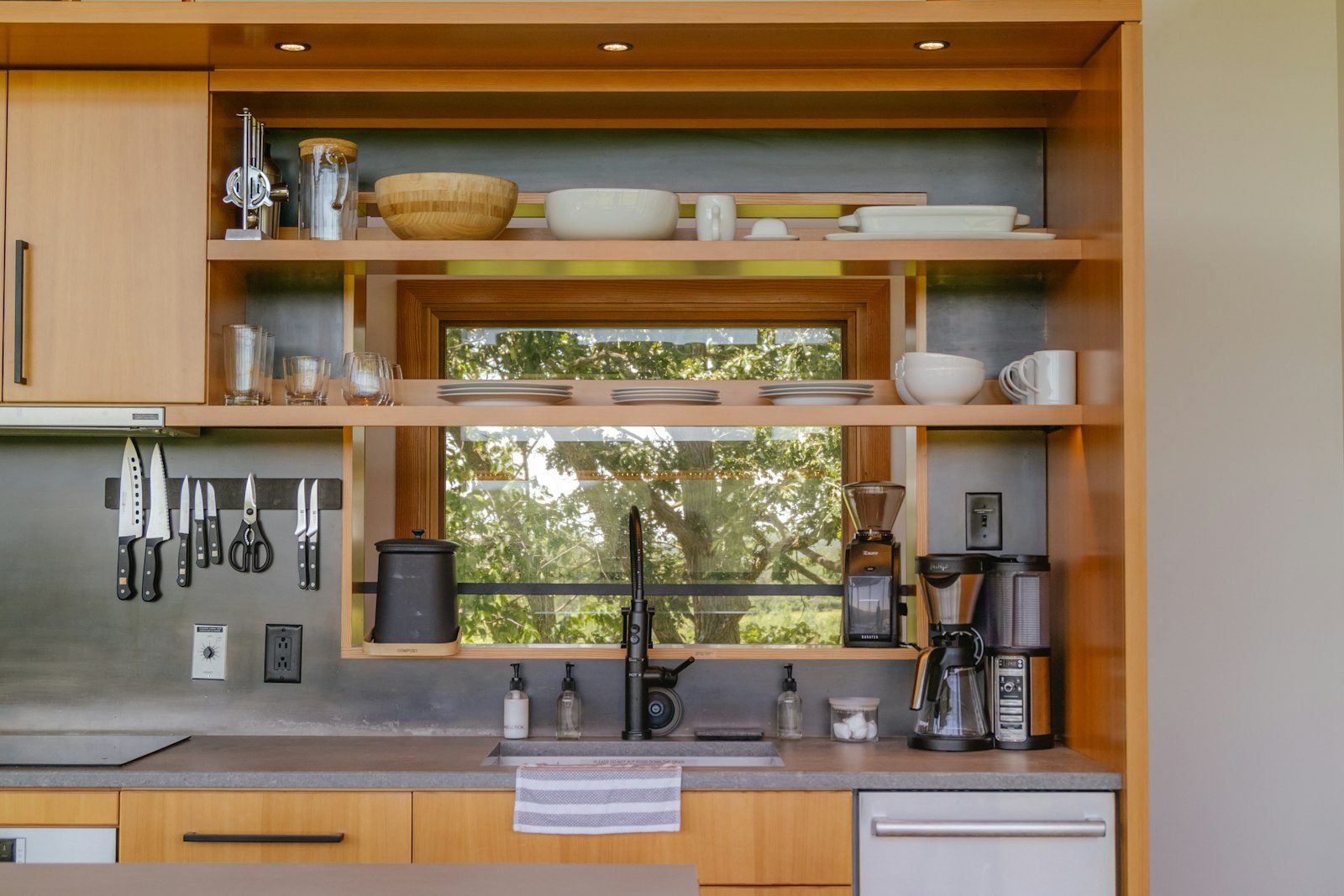
- The back of niches and open shelves: a great way to add color in small doses, as the photo below shows.
- Ceiling: possible in well-ventilated kitchens, but it takes careful installation; consider hiring a pro.
Keep in mind that wallpaper will not fix a leak. If the wall shows mold, bubbling or moisture coming from another room, address the cause before covering it. When in doubt, have a qualified professional take a look.
Patterns and colors that work in a kitchen
Your visual choice should take into account the size of the room, the natural light and the cabinetry and flooring you already have. A few combinations that tend to work:
- Small geometrics (scallops, hexagons, diamonds): they hide minor marks and give a tiled look without renovation.
- Thin stripes and subtle checks: classics for farmhouse or retro kitchens.
- Botanicals and fruit prints: they make a dining nook feel cozier and pair well with white or light wood cabinets.
- Faux-material textures (concrete, linen, wood): good for open-plan kitchens, because they flow into the living area.
- Mid and deep tones (olive green, terracotta, deep teal): they hide stains better than pure white, as long as the room is well lit.
In small kitchens, go for light backgrounds and smaller-scale patterns on a single wall. For more layout and cabinetry ideas, see our guide to small kitchen ideas. If your kitchen is open to the living room, think about continuity — our tips on living room wallpaper ideas will help you tie both spaces together.
Installation: kitchen-specific tips
The general process is the same as in any room, and you can find the details in how to hang wallpaper. In the kitchen, a few points need extra care:
- A clean, degreased wall: grease residue keeps paste from bonding. Wash the wall, let it dry thoroughly and apply primer if the manufacturer recommends it.
- The right adhesive: heavy vinyl papers need a specific paste; follow the label.
- Tight seams: that is where steam usually gets in. Press them with a smoothing tool and wipe off excess paste right away.
- Cutting around outlets and switches: switch off the circuit breaker before removing cover plates. Any electrical change should be done by a licensed electrician.
- A clean edge at the backsplash: finish the paper flush with the tile and, if needed, use a trim profile or neutral silicone to seal the joint.
How to clean it without damage
The rule is to follow the symbol on the label. For most washable vinyls, this checklist covers daily care:
- ☐ Wipe splatters as soon as they happen, before the grease sets.
- ☐ Use a soft cloth or the non-abrasive side of a sponge.
- ☐ Mix warm water with a few drops of mild dish soap.
- ☐ Work gently from top to bottom without soaking the seams.
- ☐ Dry with a clean cloth right after.
- ☐ Test any new product in a hidden spot first.
- ☐ Avoid alcohol, solvents, bleach, steel wool and abrasive pads unless the manufacturer allows them.
Keeping your range hood running, with clean filters, also greatly reduces the grease that reaches the walls. Anyone who knows homes well will tell you that the best-kept kitchen walls are usually the ones with good ventilation.
Frequently asked questions
Can washable wallpaper go behind the stove?
It is not recommended. Heat and concentrated grease can warp, stain or loosen the paper. Behind the stove and cooktop, choose ceramic tile, porcelain, tempered glass or stainless steel.
What is the difference between washable and scrubbable?
Washable paper takes a damp cloth and, at the higher levels, soapy water. Paper with the brush symbol also tolerates a soft brush, so it can handle more friction — ideal for busy kitchens.
Does peel-and-stick wallpaper work in a kitchen?
Yes, on smooth, dry walls away from the stove and sink, such as the dining area or the sides of cabinets. With heavy steam, adhesion may weaken over time.
How much does it cost to wallpaper a kitchen wall?
The price varies by region, brand, material and labor. Measure the wall, add a margin for cuts and pattern matching, and get quotes once you have chosen the roll.
Conclusion
Well-chosen washable kitchen wallpaper brings color and style without sacrificing practicality. Check the label symbols, favor vinyl, keep the paper away from direct heat and the splash zone, and clean it with gentle products. Have you used wallpaper in your kitchen? Tell us how it went in the comments — and take a look at our step-by-step installation guide.
Featured image: Photo: roam in color / Unsplash
Receba ideias de decoração no seu e-mail
Dicas práticas de decoração, jardim e organização da casa. Ao se inscrever, você recebe de presente a planilha grátis "Planejador de Decoração e Reforma". Sem excesso de e-mails.
Deixe um comentário