

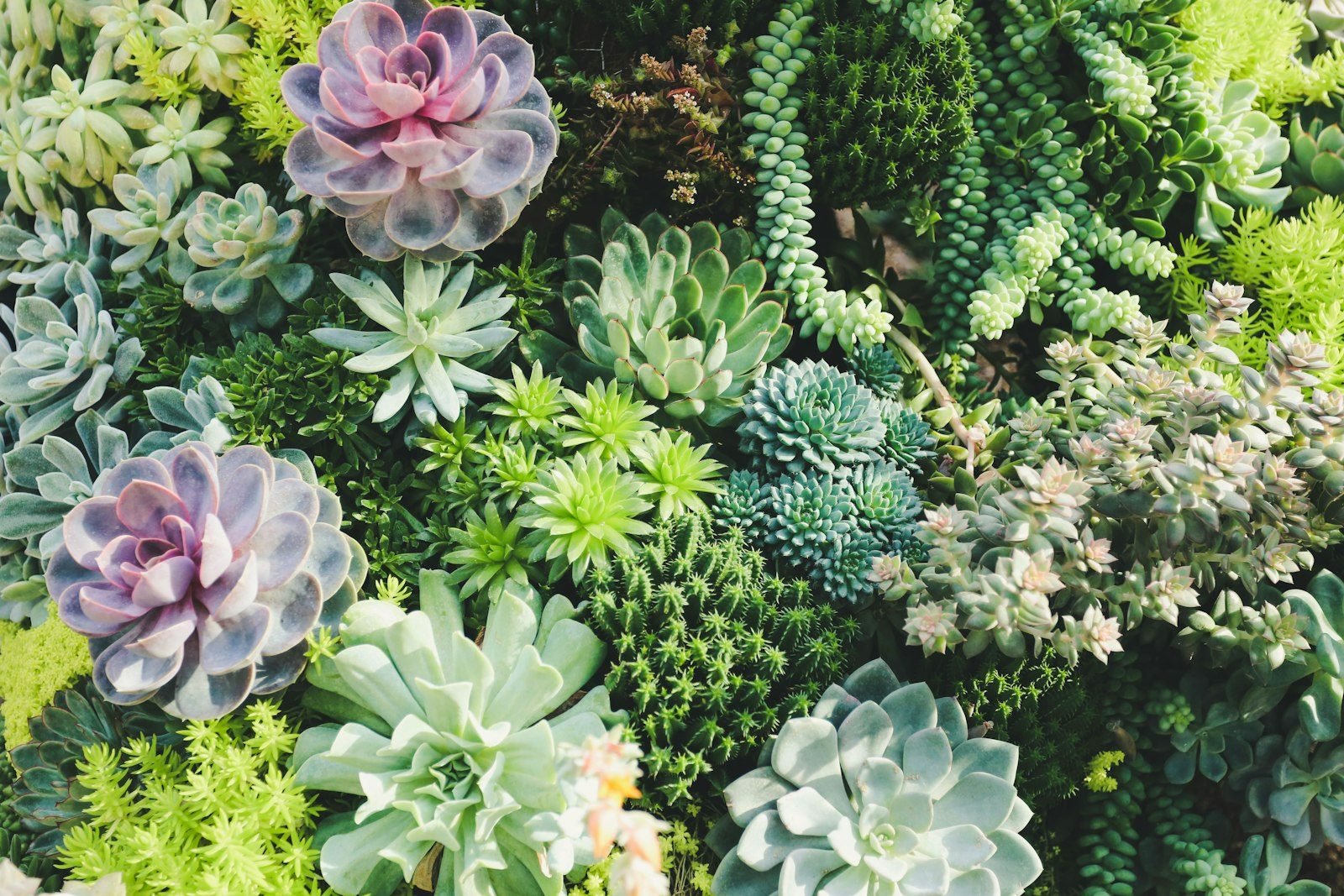
Succulents have taken over windowsills, desks and balconies around the world. Compact and colorful, they suit almost any style. Yet many people give up after their first plant rots, and succulent care usually fails from too much attention, not too little.
In this guide, you will meet the types of succulents that are easiest to find, learn what each one needs in terms of light and water, set up the right potting mix and propagate new plants at home. There is also a quick table, a checklist and a note for pet owners.
What exactly is a succulent?
“Succulent” is not a botanical family but a group of plants that store water in thick leaves, stems or roots. That reserve lets them get through dry spells. Every cactus is a succulent, but not every succulent is a cactus: echeverias, aloe and jade plants, for example, are not cacti.
This explains the golden rule: succulents handle drought well and soggy soil very badly. Roots that stay wet for too long rot, and that is the main reason these plants die indoors.
Popular types of succulents
There are thousands of species, but a handful show up again and again at garden centers. Knowing the name helps you check care and pet safety.
Echeveria (Echeveria spp.)
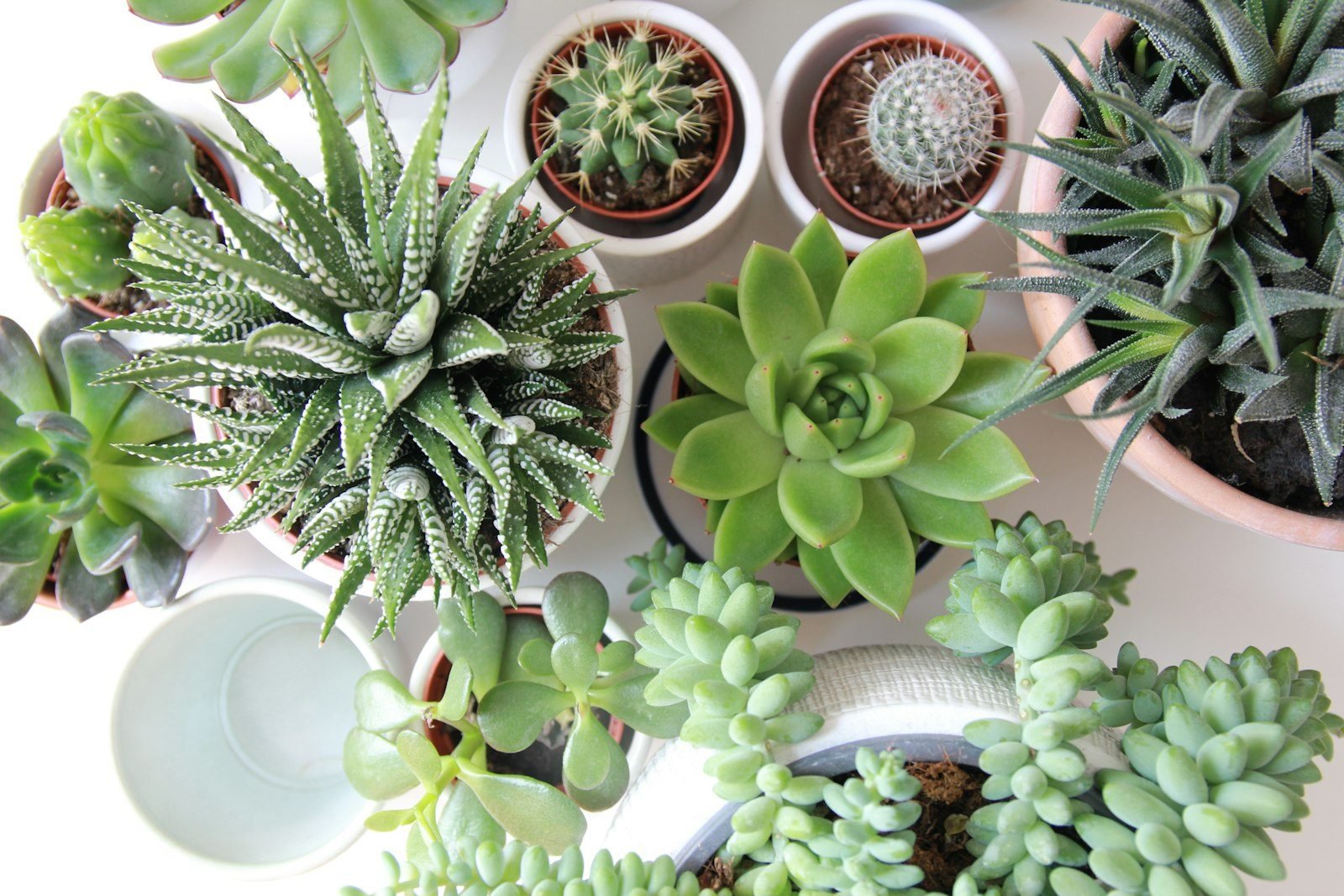
The classic rosette succulent, with leaves ranging from blue-gray to pink and lilac. It wants plenty of light: in shade it loses color and stretches toward the sun.
Haworthia (Haworthia spp.)
Small, with pointed leaves that are often striped in white. It is one of the succulents that adapts best to bright, indirect light indoors.
Burro’s tail (Sedum morganianum)
Trailing stems covered in plump little leaves make it a natural fit for hanging pots and high shelves.
Jade plant (Crassula ovata)
Grows like a small shrub with a thick trunk and glossy leaves, and can live for many years.
Aloe (Aloe vera) and kalanchoe (Kalanchoe spp.)
Aloe is known for the gel in its leaves; kalanchoe for its long-lasting flowers. Both are tough and like a lot of light.
String of pearls (Senecio rowleyanus)
Its strings of green beads look great spilling over a shelf. It is more sensitive to overwatering than the others on this list, so space out watering even more.
Quick care table
Treat this table as a starting point: climate, pot size and window position all change what each plant needs, so always check the soil before watering.
| Succulent | Light | Watering | Pets (ASPCA) |
|---|---|---|---|
| Echeveria | Direct sun or very bright light | When the soil is completely dry | Non-toxic |
| Haworthia | Bright indirect light | When the soil is completely dry | Non-toxic |
| Burro’s tail | Very bright light, gentle sun | When the soil is completely dry | Non-toxic |
| Jade plant | Direct sun or very bright light | When the soil is completely dry | Toxic |
| Aloe | Direct sun or very bright light | When the soil is completely dry | Toxic |
| Kalanchoe | Morning sun or very bright light | When the soil is completely dry | Toxic |
| String of pearls | Bright indirect light | Sparingly; never soggy | Toxic |
Light: the factor that matters most
Nearly all succulents need lots of light. Indoors, the best spot is usually the sill or a table right next to your brightest window. University of Illinois Extension recommends south- or west-facing windows; that applies to the Northern Hemisphere, while in the Southern Hemisphere north- and west-facing windows get the most sun.
Watch for two signals. If the plant stretches, leaves gaps between its leaves and turns pale, it needs more light (this is called etiolation). If brown or bleached patches appear after a sudden move into strong sun, it got sunburned, so make changes gradually. With little natural light, a grow light helps; our guide to the best plants for apartments also covers species that tolerate lower light.
Watering: less is more
Forget a fixed schedule. The safest advice, repeated by university extension services, is to check the soil with your finger and water only when it is completely dry. When you do water, soak it thoroughly until water runs out of the drainage holes, then empty the saucer.
- In warm weather, while the plant is actively growing, the soil dries faster and you will water more often.
- In cold or cloudy weather, water use drops sharply; wait even longer.
- Misting the leaves does not replace watering and, in poorly ventilated rooms, encourages fungus.
- Shriveled, wrinkled leaves mean thirst; soft, translucent or dark leaves mean too much water.
Soil, pots and feeding
The potting mix has to drain fast. Buy a ready-made cactus and succulent mix, or make your own with equal parts regular potting mix and coarse sand or perlite, as University of Illinois Extension suggests. Avoid plain garden soil, which compacts and holds too much water.
The pot must always have a drainage hole. A decorative cachepot without one only works as a cover, with a draining nursery pot inside. Terracotta helps the soil dry out; glazed ceramic and plastic hold more moisture, so water less often.
Feed monthly with houseplant fertilizer, per the label, during the growing season.
How to propagate succulents
Propagation is easy. There are three main methods:
- Leaf: twist off a whole leaf gently, without tearing the base. Let it dry in the shade for a few days until the end calluses, then lay it on barely moist potting mix. Roots and a tiny rosette appear over time.
- Stem cutting: cut a stem with clean scissors, let the cut callus and then plant it. This works well for jade plants and for echeverias that have stretched from lack of light.
- Offsets: aloe, haworthia and many echeverias produce side pups. Separate them carefully once they have a few roots and give each its own pot.
Until the new plants root, keep them in bright light without harsh sun.
Decorating with succulents
Small and slow-growing, they make lasting arrangements:
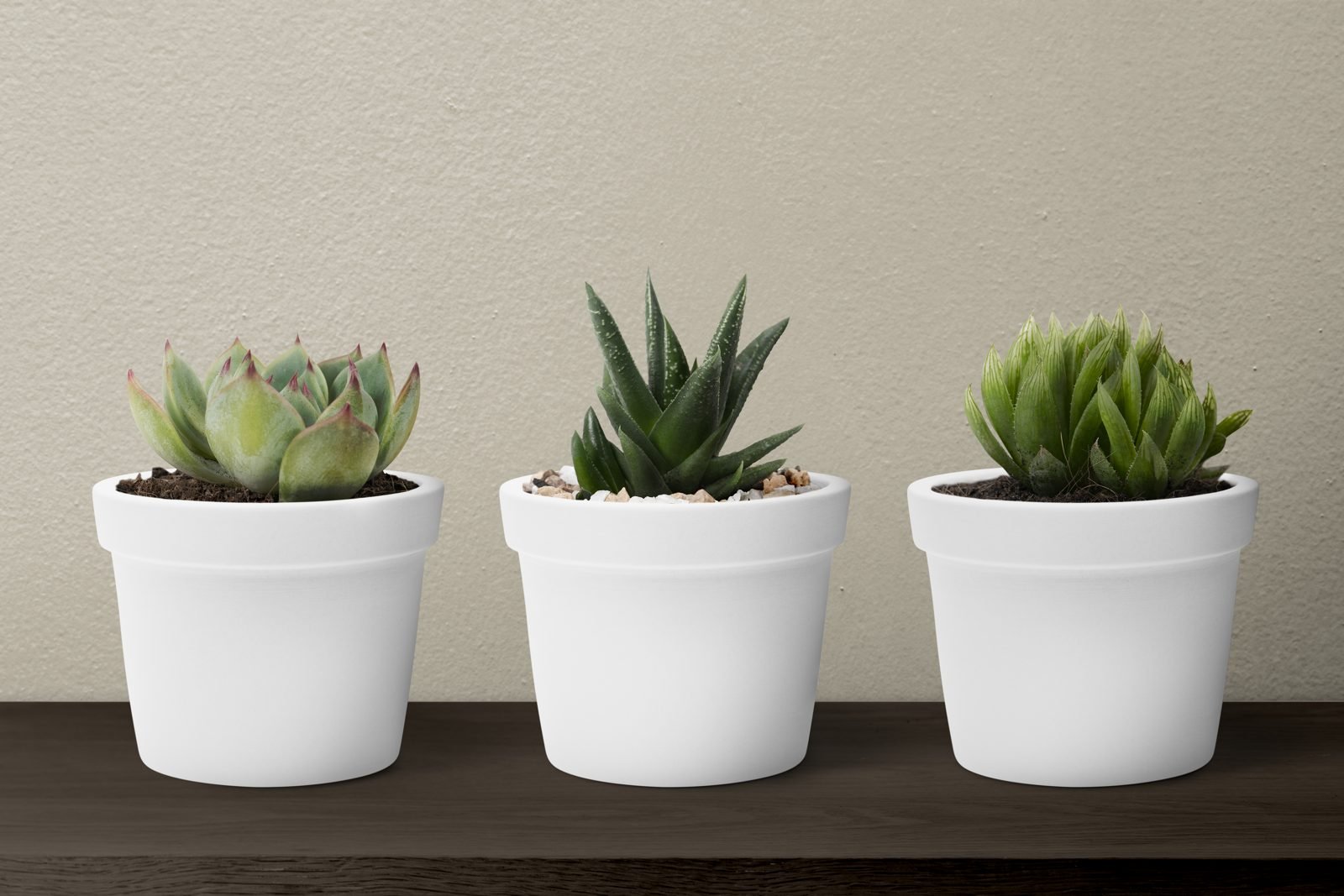
- Group three or five matching pots on a tray on the coffee table or console.
- Use trailing species such as burro’s tail and string of pearls on high shelves and wall brackets.
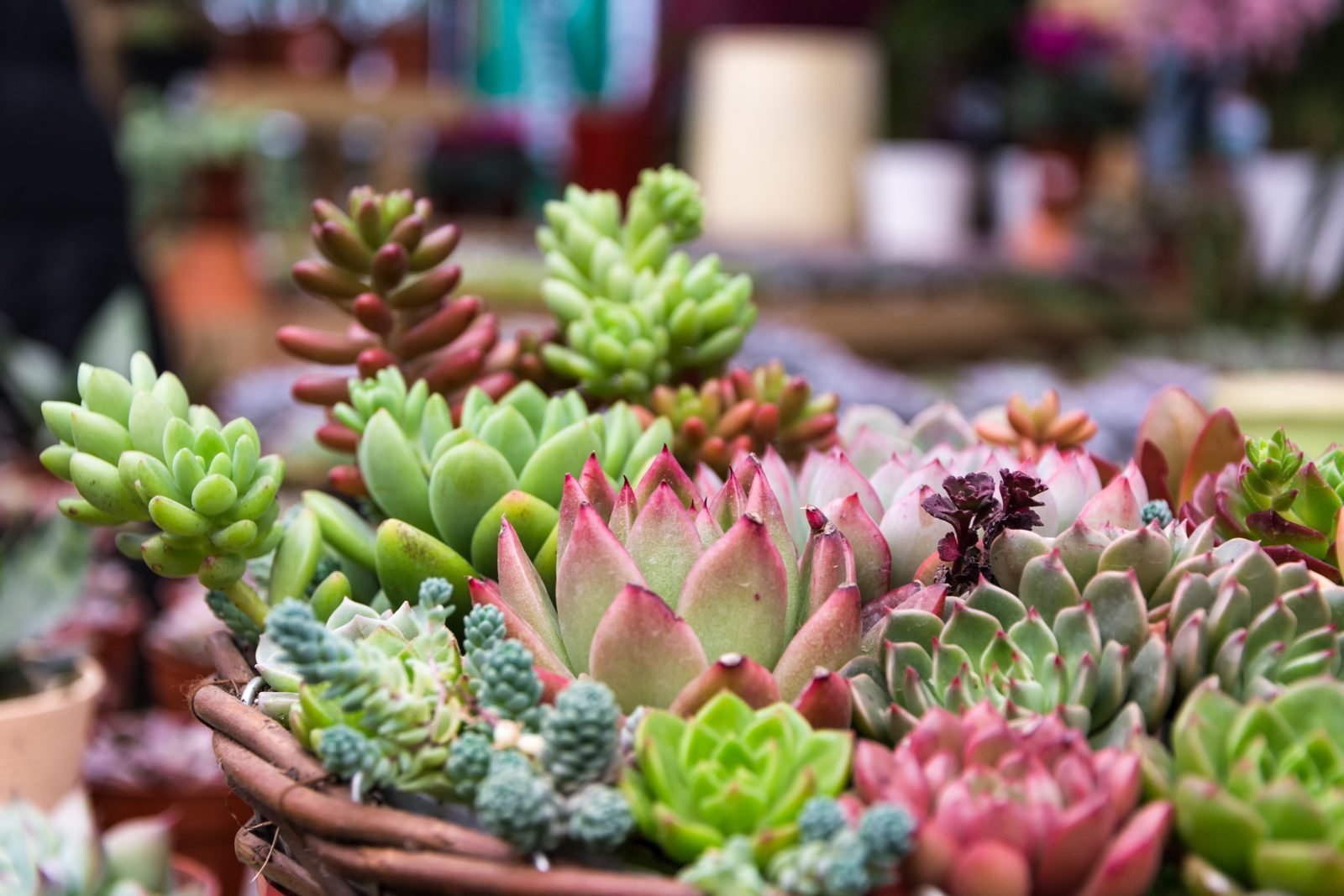
- Plant a mixed bowl with species that like the same light, so one watering routine suits them all.
- On sunny balconies they cope well with little maintenance; see more options in balcony plants.
- For green walls, choose suitable species and a well-draining system, as explained in our vertical garden guide.
From a real estate point of view, one detail stands out: healthy living plants make a room feel more welcoming in photos and viewings, and succulents deliver that with very little work.
Succulents, pets and children: be careful
Not every succulent is harmless. According to the ASPCA, which maintains a database of plants that are toxic to animals, jade plant, aloe, kalanchoe and string of pearls are toxic to dogs and cats and can cause vomiting, diarrhea and lethargy; for kalanchoe, the ASPCA also mentions rare abnormal heart rhythm. Haworthia, burro’s tail and echeverias are listed as non-toxic, although any plant can cause mild stomach upset if chewed.
If you have pets or young children, favor the non-toxic species and keep the others out of reach. If someone eats a plant, contact a veterinarian (or seek medical care for a child) and bring the plant’s name.
Troubleshooting checklist
- ☐ Soft, dark leaves at the base: too much water; stop watering and check the roots.
- ☐ Stretched stem and pale color: not enough light; move it closer to the window gradually.
- ☐ Thin, wrinkled leaves: thirst; water thoroughly and let it drain.
- ☐ White, cotton-like spots: possible mealybugs; isolate the plant and dab them with a cotton swab dipped in rubbing alcohol.
- ☐ Brown patches after a move: sunburn; acclimate slowly.
Frequently asked questions
How often should I water succulents?
There is no fixed number. Water only when the soil is completely dry, which can take anywhere from a few days to a few weeks depending on climate, pot and light.
Can a succulent live in a room without a window?
Not for long. Without natural light it stretches and weakens. In a windowless room, only with a proper grow light.
Can I plant several succulents in the same pot?
Yes, as long as they all like the same light and watering frequency and the pot has drainage.
Which succulents are safe for cats and dogs?
According to the ASPCA, haworthia, burro’s tail and echeverias are non-toxic. Jade plant, aloe, kalanchoe and string of pearls are toxic.
Conclusion
With light, sparing water and good drainage, succulents live for years and give you new plants to share. Which one is your favorite? Tell us in the comments, and take a look at our guide to the best plants for apartments.
Featured image: Photo: Yen Vu / Unsplash
Receba ideias de decoração no seu e-mail
Dicas práticas de decoração, jardim e organização da casa. Ao se inscrever, você recebe de presente a planilha grátis "Planejador de Decoração e Reforma". Sem excesso de e-mails.
Deixe um comentário